AHАFO ANO NORTH — A controversy has emerged involving an NDC constituency youth organizer who is also reported to serve as a Youth Employment Agency (YEA) Director for Ahafo Ano North.
According to claims circulating in connection with footage shared online, the organizer was allegedly confronted over an intimate encounter involving the wife of another NDC Ahafo Ano North Branch Organizer.
NDC constituency youth organizer faces controversy over alleged intimate encounter.
The incident has attracted attention online, with footage appearing to show the man in a room during the confrontation. The circumstances surrounding the recording, including when and where it was made, have not been independently established.
The allegations have also raised questions about the responsibilities of political party organizers and public officials, particularly where conduct outside official duties becomes a matter of public controversy.
While the identities and positions attributed to those involved have been circulated alongside the footage, claims about the incident should be treated cautiously until the individuals concerned provide their accounts or further independently verifiable evidence emerges.
For the latest developments from Ghana’s political landscape, readers can follow Ghana News and ongoing updates through Ghana News Live.
The controversy comes as political party structures continue to attract public attention, particularly around the conduct of constituency-level officials and organizers. GhanaMedia.net will continue to follow any verified developments or responses from the individuals involved.
Readers can also follow the latest political and national developments through Top Stories.
Questions concerning public appointments, institutional responsibilities and governance can be followed through the Policy & Law Hub.
MORE DETAILS AND RESPONSES FROM THE PARTIES INVOLVED ARE EXPECTED.
The High Court in Accra has remanded four Ghanaians over alleged involvement in the export of nearly four tonnes of cocaine from Ghana to France. Musah Attah, known as “Kromo,” is among those charged.
Musah Attah Among Four Charged Over €225m Cocaine Shipment 3
Editorial Label: CRIME | INVESTIGATION | GHANA | INTERNATIONAL
Verification Status: VERIFIED COURT REPORT — Four accused have been charged and remanded; the alleged role of Musah Attah as a close-protection officer at the Office of the President is not independently confirmed by the sources reviewed.
Musah Attah Named Among Four Accused
A Ghanaian identified as Musah Attah, alias “Kromo,” has been formally charged alongside three other people over an alleged attempt to export nearly four tonnes of cocaine from Ghana to France.
The four accused — Desmond Koranteng Curiel, alias “Paul Kweku Yeboah” or “Biggs”; Musah Attah, alias “Kromo”; Kweku Otchere; and Jessica Hartog — appeared before the High Court in Accra on September 16, 2026.
They were charged with conspiracy to commit a crime involving the exportation of narcotic drugs without a licence and the exportation of narcotic drugs.
The court remanded the accused and scheduled the case for a further hearing on October 13, 2026.
The accused have pleaded not guilty, according to court reporting.
The Cocaine Seizure in France
The Ghanaian case follows a major cocaine seizure by French customs authorities at the port of Dunkirk on September 10, 2026.
French authorities seized approximately 3.9 tonnes of cocaine concealed inside a container carrying plastic waste that had arrived from Ghana. The shipment has been reported as having an estimated street value of approximately €225 million.
Part of the consignment was reportedly intended for onward movement to Antwerp, Belgium.
The seizure prompted cooperation between Ghanaian and French authorities as investigators sought to establish how the suspected narcotics were allegedly moved from Ghana into the international supply chain.
What Prosecutors Alleged in Court
According to the prosecution’s brief facts reported in court, Ghana’s Narcotics Control Commission (NACOC) received information about a 40-foot container containing plastic waste that had originated from Ghana and was subsequently intercepted in France.
The prosecution alleged that the accused were connected to the shipment.
It further said NACOC arrested three of the accused on September 12, while Musah Attah was arrested on September 14 at NACOC headquarters, according to the court account.
The prosecution also said searches conducted during the investigation resulted in the retrieval of three guns, four luxury vehicles, passports, ammunition and various sums of money.
These are prosecution claims presented in the ongoing case and have not been established as evidence of guilt.
Who Is Musah Attah?
The court reporting identifies Musah Attah, 47, by the alias “Kromo” and describes him as a farmer.
The supplied graphic circulating online describes him as a close-protection officer at the Office of the President.
However, GhanaMedia has not found a reliable current official or independent source confirming that employment description in connection with the present case. It is therefore not being presented as an established fact.
The distinction is important because the criminal charges concern the alleged exportation of narcotic drugs and conspiracy. They do not, at this stage, establish that Musah Attah is guilty of the offences alleged against him.
The Other Accused
Desmond Koranteng Curiel, also known as Paul Kweku Yeboah or “Biggs,” is described in the prosecution’s account as a 34-year-old businessman/business broker.
Kweku Otchere, 32, is described as a businessman.
Jessica Hartog, 34, is described as a beautician and the fiancée of Curiel.
A fifth person, Jos Leijdekkers, a Dutch national also known as “Bolle Jos,” has been named in connection with the investigation and remains at large, according to court reports.
NACOC has previously alleged that people arrested in Ghana were connected to or facilitated the activities of Leijdekkers in Ghana.
The Accused Deny the Charges
The court proceedings have not established guilt.
The four accused have pleaded not guilty to the charges. The prosecution’s allegations remain subject to the judicial process, and the accused are presumed innocent unless proven guilty in accordance with Ghanaian law.
The case is expected to return to court on October 13, 2026.
Why the Case Matters
The investigation has attracted attention because of the scale of the French seizure and the international route involved.
Nearly four tonnes of cocaine were found concealed in a commercial container originating from Ghana, while the subsequent Ghanaian investigation has resulted in criminal charges against four people.
The case also involves cooperation between Ghanaian and French authorities as investigators attempt to establish the full chain behind the shipment.
For now, the central facts established through the court proceedings are that four people have been charged, they have pleaded not guilty, and they remain in custody pending further proceedings.
The wider allegations — including who organised the shipment, how the drugs entered the container, who financed or facilitated the operation and what roles individual accused persons allegedly played — remain matters for the ongoing investigation and court process.
GhanaMedia will continue to follow the case as proceedings develop.
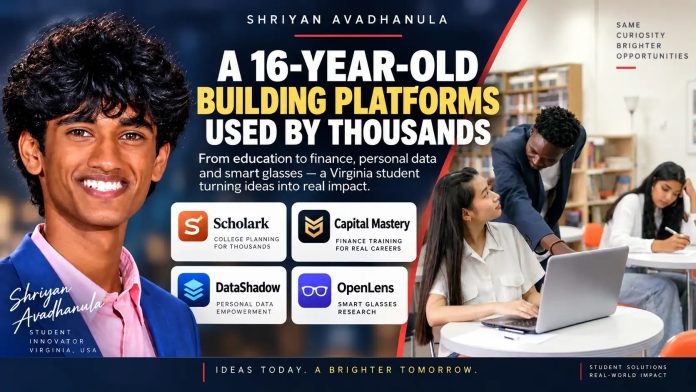
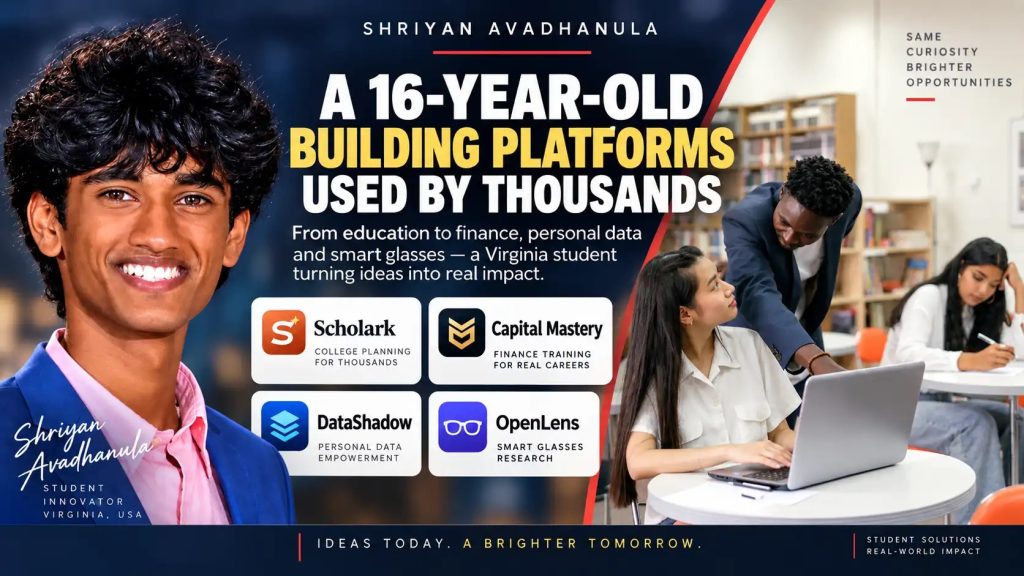
From a free college toolkit with more than 10,000 monthly users to finance training, personal-data technology and smart-glasses research, the Virginia student is building a portfolio that reaches well beyond the classroom.
Virginia student Shriyan Avadhanula is building technology platforms across education, finance, personal data and smart glasses.
By Shriyan Avadhanula and Daniel Jeddman
At 16, Shriyan Avadhanula is already confronting a question that many entrepreneurs spend years learning how to answer: What do you build when you encounter something that does not work the way it should?
For Avadhanula, the answer has repeatedly been software.
A problem with tracking his grades became Scholark, a free college-planning platform that currently reports more than 10,000 students each month.
Questions about the difference between learning finance and actually performing finance work became Capital Mastery, a training platform designed around practical exercises, simulations and career preparation.
Questions about the economic and personal value of people’s digital information became DataShadow, a functional prototype for which Avadhanula says he filed a U.S. provisional patent application on August 19, 2026.
And his interest in emerging wearable technology led to OpenLens, a project designed to help people research, benchmark and simulate different smart-glasses capabilities.
The projects are different. The underlying habit is not.
Find a gap. Learn what is missing. Build something. Test it. Find another weakness. Learn again.
Scholark: A Student’s Problem Becomes a 10,000-User Platform
Scholark did not begin as a business plan. It began with a student trying to solve his own problem.
Avadhanula wanted a more useful way to calculate and track his academic performance. After building the initial GPA functionality, he began adding tools around the broader college-preparation process.
The result became Scholark.
Today, the official Scholark website describes the platform as a student-built, non-commercial educational project offering free academic and college-planning tools. Its public website currently reports 10,000+ students monthly, alongside tools covering GPA calculations, college comparisons, admissions guidance, SAT/ACT preparation, AP study resources, scholarships, student-loan calculations and essay feedback.
The platform also tracks more than 200 universities and provides tools designed to help students make sense of academic and admissions information.
But Avadhanula is careful about the limits of the technology.
An admissions calculator is an estimate. A college comparison is not a guarantee. An essay coach is not a replacement for an experienced counselor.
That distinction is important because the platform’s purpose is not to promise students an outcome. It is to make preparation easier.
Why Keep It Free?
The idea of giving students useful tools for free creates an obvious business question: How do you sustain the platform?
There are servers to maintain. There is development work. There is infrastructure. And there is the opportunity cost of spending hundreds of hours building something that does not currently operate as a conventional commercial company.
Scholark’s public website describes it as non-commercial, not incorporated as a company or employer, and not revenue-generating.
For Avadhanula, that has allowed the platform to focus on accessibility first.
But he is not necessarily arguing that free technology must always remain free.
The larger question is how a useful product can eventually sustain itself without destroying the accessibility that made people use it in the first place.
For now, the evidence of demand is already visible in the platform’s reported monthly usage.
From College Preparation to Investment Banking
The next platform grew from a different realization.
Knowing finance terminology is not the same thing as knowing how to perform financial work.
A student might understand what enterprise value means. That does not automatically mean the student can construct a valuation.
Someone may know the definition of comparable-company analysis. That does not mean they know which companies should be selected or how to defend the selection.
And someone can complete a finance course without ever experiencing the pressure of making a judgment when the answer is not obvious.
That gap became the foundation for Capital Mastery.
The platform is designed around practical finance career preparation, with training across areas including investment banking, private equity, corporate development, quantitative finance, FP&A, risk management, wealth management and real estate.
Its model combines learning with applied exercises, simulations, calculations, research, modelling and decision-making.
The platform’s public materials describe it as a free finance workforce-readiness system serving both individual learners and employers.
That distinction is important. Capital Mastery is not simply trying to teach students what finance professionals know. It is attempting to let learners practice what finance professionals do.
When the Classroom Meets the Workplace
According to materials supplied for this profile, Sterling Point Advisors, a boutique M&A advisory firm, agreed to use Capital Mastery as an in-house training resource for interns. Avadhanula says other firms in the United States have also used or considered the platform.
Those company-specific relationships are based on the supplied documentation and founder account rather than independently published corporate announcements, and are therefore presented here as attributed information.
For Avadhanula, however, the experience changed the standard by which he judged the platform.
A website can look impressive. A training system can contain hundreds of lessons.
But when professionals actually use it, the question becomes much simpler: Does it work?
That is also where mentorship has become important.
Avadhanula says his M&A work is reviewed by an experienced professional who challenges his assumptions and asks questions that cannot always be answered by simply remembering a formula.
Why these comparable companies? Why this assumption? What changes if the assumption is wrong? What happens to the valuation if the underlying premise changes?
The uncomfortable answer is often the most valuable one.
A weakness discovered through actual feedback is difficult to forget.
More Than 80 Credentials — But Credentials Are Not the Point
Avadhanula’s own learning record has grown alongside his platforms.
The material supplied for this profile says he has accumulated more than 30 professional-learning credentials, certifications and job simulations across finance, cybersecurity, artificial intelligence, risk management and technology.
His recent public LinkedIn post also describes reaching 30+ industry credentials, certifications and professional-learning programmes, naming organisations including Goldman Sachs, JPMorganChase, Anthropic, OpenAI, Microsoft, Bank of America, Citi, Mastercard, CFI and IBM.
That is a long list for anyone. At 16, it attracts even more attention.
But Avadhanula’s stated philosophy is that the certificates are only useful if they produce a capability.
A credential should lead to something he can build. A course should give him another framework. A simulation should make him better at doing the real task.
DataShadow: What If People Had More Control Over Their Data?
Then came DataShadow.
The concept begins with an increasingly familiar reality: people generate enormous quantities of data without necessarily understanding the economic and analytical value attached to it.
Searches. Purchases. Locations. Preferences. Habits. Digital activity.
Companies can use information like this to understand customers, forecast behaviour and make commercial decisions. But the individual generating the information often has little visibility into the process.
DataShadow asks a different question: What would personal data management look like if the individual had an intelligent system representing their interests?
The project’s public documentation describes DataShadow as a personal-data operating system and functional public-beta prototype. It allows users to import supported data, examine derived assets, define consent rules, test exchanges and maintain an auditable local record.
But one of the project’s most important features is not what it claims to do. It is what it explicitly says it does not claim to do.
DataShadow labels information according to whether it is real, public, modelled or simulated.
Its public documentation says buyer activity and monetary outcomes remain synthetic prototype scenarios during the public beta.
That matters. Technology demonstrations can easily blur the line between a prototype and a functioning commercial ecosystem.
A U.S. Provisional Patent Filed at 16
On August 19, 2026, DataShadow’s public documentation says Avadhanula filed a U.S. provisional patent application covering the platform’s integrated personal-data asset-management architecture.
It identifies Avadhanula as the sole inventor and records his age at filing as 16.
Avadhanula separately announced the filing publicly on LinkedIn, explaining that the project grew from a question about whether people could have greater control over how their personal information is accessed, protected and potentially valued.
A provisional patent application is not an issued patent. It does not mean the U.S. Patent and Trademark Office has granted a patent. It does, however, represent a formal intellectual-property filing connected to a technology project developed by a high-school student.
And DataShadow itself remains a prototype. Its public documentation says real-money settlement and verified production buyers belong to a potential future production phase rather than the current public beta.
OpenLens: Looking Beyond the Screen
Avadhanula’s newest major direction moves into hardware.
Smart glasses are developing quickly, but the category remains fragmented.
Different devices have different cameras, sensors, displays, developer environments and power constraints. Some have screens. Some rely almost entirely on audio and cameras.
That creates a problem for developers trying to build experiences that work across multiple devices.
OpenLens is intended to provide a research and experimentation environment around those differences.
Its public project documentation describes research, device comparison, simulation and benchmarking, while distinguishing manufacturer specifications from simulated behaviour and capabilities that have actually been tested.
According to correspondence supplied for this profile, Avadhanula was invited by Edison Li of RX Global to attend the 2026 Shenzhen International AI+AR Smart Glasses Industry Expo in China.
The invitation itself is based on supplied documentation.
The event, however, can be independently verified through its official organizer.
The Shenzhen exhibition is scheduled for October 27–29, 2026, at the Shenzhen World Exhibition & Convention Center. The organizer lists more than 3,600 exhibitors and brands and more than 170,000 visitors across concurrent exhibitions.
For a teenager who began exploring the smart-glasses ecosystem from a laptop in Virginia, the opportunity represents something software alone cannot provide: direct exposure to manufacturers, hardware engineers, optics, components, industrial supply chains and developers.
Avadhanula’s point is simple: “I can build a simulator on my laptop. I can’t simulate the whole industry.”
ATHENA, DinkSense and the Work Between the Headlines
The four major platforms do not represent the entire portfolio.
Avadhanula has also co-founded ATHENA, an athlete-intelligence research platform.
According to the figures published on his Scholark profile, ATHENA’s models have been validated across 27,548 athletes and 155,109 real-world race records.
He has also developed DinkSense, a privacy-focused coaching and performance-analytics project connected to pickleball.
And his work extends into cybersecurity through an annual Cyber Risk Intelligence Report.
This creates an unusual combination: education, finance, artificial intelligence, cybersecurity, personal-data technology, sports analytics and wearable technology.
The common thread is not a single industry. It is problem-solving through technology.
Why the Numbers Matter — and Why They Don’t
There are enough numbers in Avadhanula’s story to build an entire résumé around them.
10,000+ monthly Scholark users. 30+ professional credentials. 80+ Capital Mastery credentials. 27,548 athletes. 155,109 race records. A provisional patent. A smart-glasses industry invitation.
But numbers alone do not determine whether a technology project will survive.
Usage can fall. A prototype can fail. A patent application can never become an issued patent. A platform can outgrow its infrastructure. A business model can change. An idea can prove less useful in practice than it looked on paper.
Avadhanula appears to understand that.
That is why his comments repeatedly return to the same idea: Build first. Find the weakness. Learn. Improve.
At Some Point, Being 16 Stops Being the Story
Age makes the story remarkable today. But age will not remain the central fact forever.
Avadhanula will turn 17. Then 18. Then 20. Eventually, nobody will describe him as a teenage developer.
At that point, the platforms will have to stand on their own.
Scholark will have to continue delivering value to students. Capital Mastery will have to demonstrate that its practical training is useful to learners and organizations. DataShadow will have to withstand scrutiny from privacy specialists, cybersecurity professionals, lawyers and data-market experts. OpenLens will have to prove that developers and researchers can use it.
The technology will have to become more important than the biography.
And Avadhanula himself appears conscious of that.
“Being 16 might get someone to look once. It can’t be the reason they come back.”
Building Before Being Fully Ready
There is a traditional sequence for professional development: Study. Credential. Experience. Then build.
Avadhanula’s approach reverses parts of that process.
He builds. The project exposes what he does not know. He studies the missing knowledge. He builds again. Then somebody else tests it.
The cycle repeats.
That can be uncomfortable. Building something forces theoretical gaps into the open. A person can sometimes get through an examination while only partially understanding a concept. A real product is less forgiving.
If the understanding is incomplete, eventually something breaks.
Avadhanula describes that as part of the advantage of building. The weakness becomes visible. And once it becomes visible, it can be addressed.
A Cross-Border Collaboration
The story also connects the United States and Ghana through Avadhanula’s collaboration with Daniel Jeddman, journalist, author and publisher behind GhanaNews.org & GhanaMedia.net.
Shriyan Avadhanula: The 16-Year-Old Building Platforms Used by Thousands 6
That collaboration forms part of the development and publication of this profile.
For GhanaMedia, the significance extends beyond the technology itself.
Young innovators are increasingly building globally from places that may be thousands of miles away from the industries they hope to influence.
A student in Virginia can build a college platform used by students beyond the United States. A teenager can develop finance simulations inspired by professional workflows. A personal-data prototype can raise questions about the future relationship between individuals and companies. And a smart-glasses project can eventually lead to conversations with an international hardware industry.
The geography of innovation is changing.
The internet makes the first connection possible. The quality of the work determines whether the connection lasts.
The Work Is Still Unfinished
There is no guarantee that every one of Avadhanula’s projects will become a major company.
There is no guarantee that DataShadow’s provisional filing will result in an issued patent.
There is no guarantee that a free educational platform will remain free indefinitely.
There is no guarantee that OpenLens will become an important developer tool.
Those uncertainties are not weaknesses in the story. They are part of what makes the story honest.
At 16, Avadhanula is not presenting himself as someone who has already solved these industries. He is building experiments around questions he believes are worth answering.
And the experiments are beginning to attract users, professional feedback and industry attention.
That is different from having finished. It is evidence of movement.
“I Want More Time to Get Better”
There is one idea that ties the entire portfolio together.
Avadhanula does not appear to regard being young as the destination. He regards it as additional time.
Additional time to learn finance. Additional time to understand cybersecurity. Additional time to experiment with artificial intelligence. Additional time to make mistakes. Additional time to rebuild. Additional time to discover whether the ideas actually work.
“I don’t want starting young to be the accomplishment. I want it to mean I had more time to get better.”
That is ultimately where the story of Shriyan Avadhanula stands.
Not at the finish line. Not at the point where a 16-year-old has supposedly figured everything out.
But at a much earlier and potentially more consequential stage: the point where curiosity has already turned into products that other people are beginning to use.
And somewhere today, a student may open Scholark without knowing the name of the person who built it.
They calculate their GPA. Compare a university. Practice for an exam. And then move on with their day.
For the creator, that may be the most meaningful form of validation.
The technology worked. The student got what they needed.
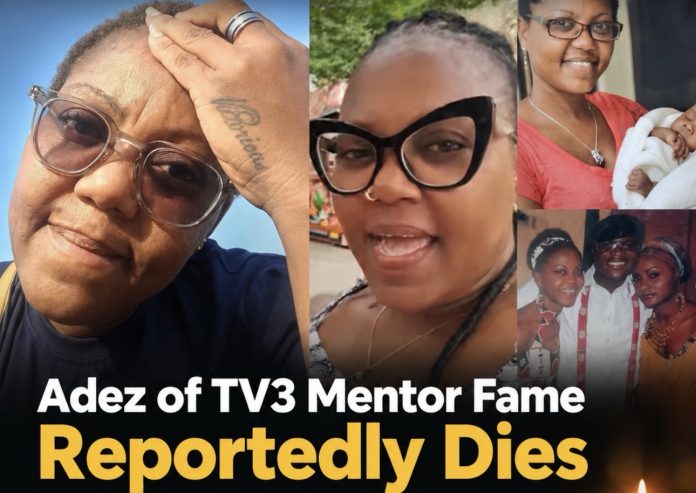
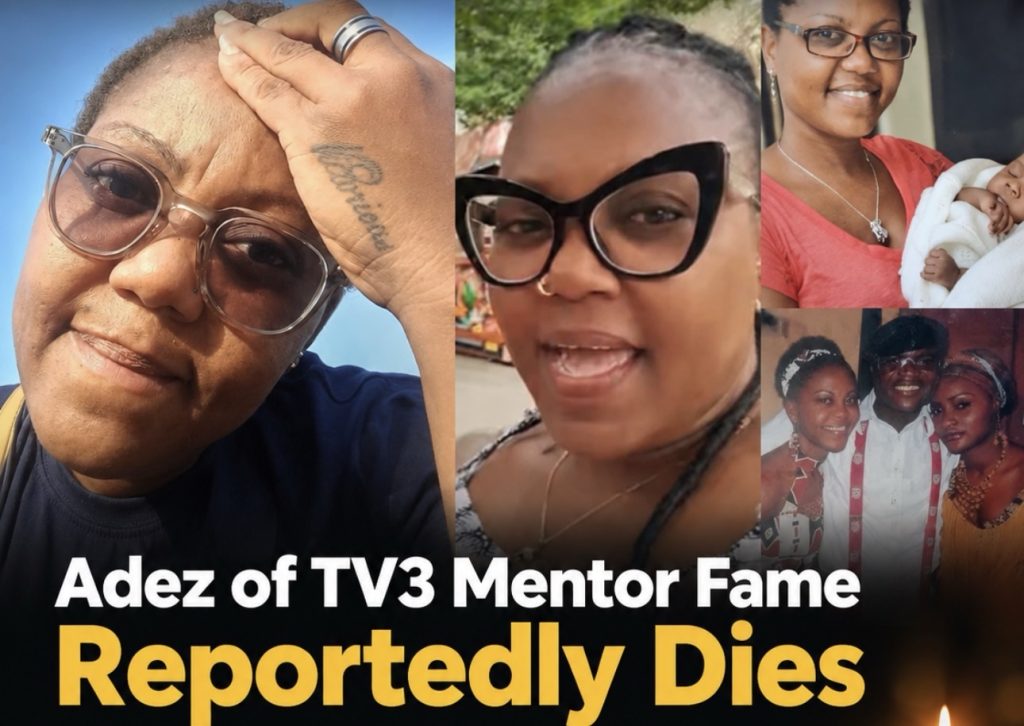
Ghana’s entertainment community is mourning the reported death of Adez, a former contestant of TV3’s popular Mentor music reality show.
According to information shared with GhanaMedia, Adez — reportedly known in private life as Adadzewa — died only days after attending a funeral gathering at the State House in Accra, where she reportedly spent the day assisting with food and drinks for mourners.
Adez of TV3 Mentor fame is reportedly dead as Ghana’s entertainment community mourns.
The circumstances and cause of her reported death have not been independently established.
Adez’s Mentor Journey
Adez became known to Ghanaian television audiences through Mentor II, TV3’s music reality competition in 2006.
Contemporary reports from the period document her participation in the competition. A November 2006 report identified Adez among the contestants and discussed her performances during the competition.
She also remained active in Ghana’s music industry after the programme.
In 2007, Adez performed alongside veteran highlife musician Ben Brako during the launch of his album Adende. Contemporary reporting described her as an artiste of TV3 Mentor fame.
Adez was also involved in music projects with other Ghanaian musicians. In 2007, she was listed among artistes featured on an Obrafuor project connected to the Black Stars.
Her music career continued beyond Mentor. In 2012, NewsGhana reported on her single “Budiin,” featuring Stonebwoy.
A Reported Final Appearance at a Funeral
Information supplied to GhanaMedia says Adez attended the funeral of the mother of a female backing vocalist at the State House in Accra on September 5, 2026.
According to a person who reportedly worked with her that day, Adez remained at the venue for much of the day, assisting with activities connected to the event while also working on sound and jingles.
The account has not yet been independently corroborated by GhanaMedia.
Shock Across the Music Community
News of Adez’s reported passing has prompted tributes from people who remember her contribution to Ghana’s entertainment industry.
Her journey from the Mentor stage into music performances and recording projects made her part of a generation of artistes introduced to national audiences through TV3’s reality music platform.
Her reported death, if confirmed, would mark another loss for Ghana’s entertainment community.
For now, GhanaMedia is continuing to seek confirmation from family members, colleagues and other authoritative sources regarding the reported death.
Rest in peace, Adez, if the reports are confirmed.
By GhanaMedia.net | Entertainment Desk
Follow @GhanaMedia123 on X for the latest Ghana and African news updates.
The Digital Innovation Awards (DIA) will mark its 15th anniversary in Accra on October 15, 2026, bringing together technology leaders, innovators, policymakers and digital businesses to celebrate achievements shaping Africa’s digital economy.
Digital Innovation Awards marks 15 years as Africa’s technology leaders prepare to converge in Accra.
The awards ceremony is scheduled for the Kempinski Hotel Gold Coast City, Accra, and forms part of the wider programme surrounding the 7th Africa Public Sector Conference & Awards (APSCA 2026), which runs from October 14–16.
From GITTA to the Digital Innovation Awards
The platform began as the Ghana Information Technology & Telecom Awards (GITTA) before evolving into the Digital Innovation Awards.
According to the organisers, the transformation reflects the rapid expansion of Africa’s digital economy and the growing influence of technology across business, government and society.
The 2026 edition is positioned around sectors including telecommunications, fintech, banking, healthcare, agriculture, education, infrastructure, cybersecurity and emerging digital technologies.
The organisers describe DIA as a platform for recognising organisations and individuals developing digital solutions and driving measurable transformation across the continent.
Digital Economy Live to Precede Awards
The celebrations will also include Digital Economy Live (DEL) 2026, a strategic conference focused on Africa’s digital economy.
The official DIA platform describes DEL as a high-level gathering of technology leaders, policymakers, regulators, investors and enterprise decision-makers examining the implementation and scaling of digital transformation.
Topics listed for the programme include digital infrastructure, financial technology, cybersecurity, digital trust, artificial intelligence and the changing relationship between technology, society and business.
Technology Leaders on the Programme
The DIA website lists several technology and public-sector figures among its speakers, including Samuel Nartey George, Minister for Communications, Digital Technology & Innovations; Edmund Yirenkyi Fianko, Director-General of the National Communications Authority; Ikechukwu Nnamani, CEO of Digital Realty Nigeria; and other technology and business executives.
The programme also includes discussions around digital infrastructure, financial-sector technology, cybersecurity and how digitalisation is reshaping social and business life across Africa.
Part of a Wider African Public-Sector Gathering
DIA 2026 is taking place during the same week as APSCA 2026, which will run from October 14–16 at Kempinski Hotel in Accra.
APSCA is expected to bring together senior public-sector leaders, policymakers, CEOs and other decision-makers from across Africa under the theme “Governance 2030: Resilient Institutions for a Digital, Green & Secure Africa.”
Ghana’s Chief of Staff, Julius Debrah, is listed by APSCA among its distinguished speakers.
Celebrating Africa’s Digital Transformation
The 15th edition comes as digital technology continues to influence how Africans conduct business, access financial services, interact with government and connect with global markets.
The organisers say DIA seeks to recognise innovations that go beyond ideas to demonstrate practical impact, while creating opportunities for collaboration between businesses, governments, investors and technology leaders.
The Digital Innovation Awards 2026 will take place on October 15 at Kempinski Hotel Gold Coast City in Accra, with the wider APSCA programme running from October 14–16.
By GhanaMedia.net | Technology & Digital Economy Desk
Follow @GhanaMedia123 on X for the latest Ghana and African news updates.
Ghana’s agricultural sector plays a major role in the economy, but access to affordable and appropriately structured finance remains a significant challenge for farmers and agribusinesses.
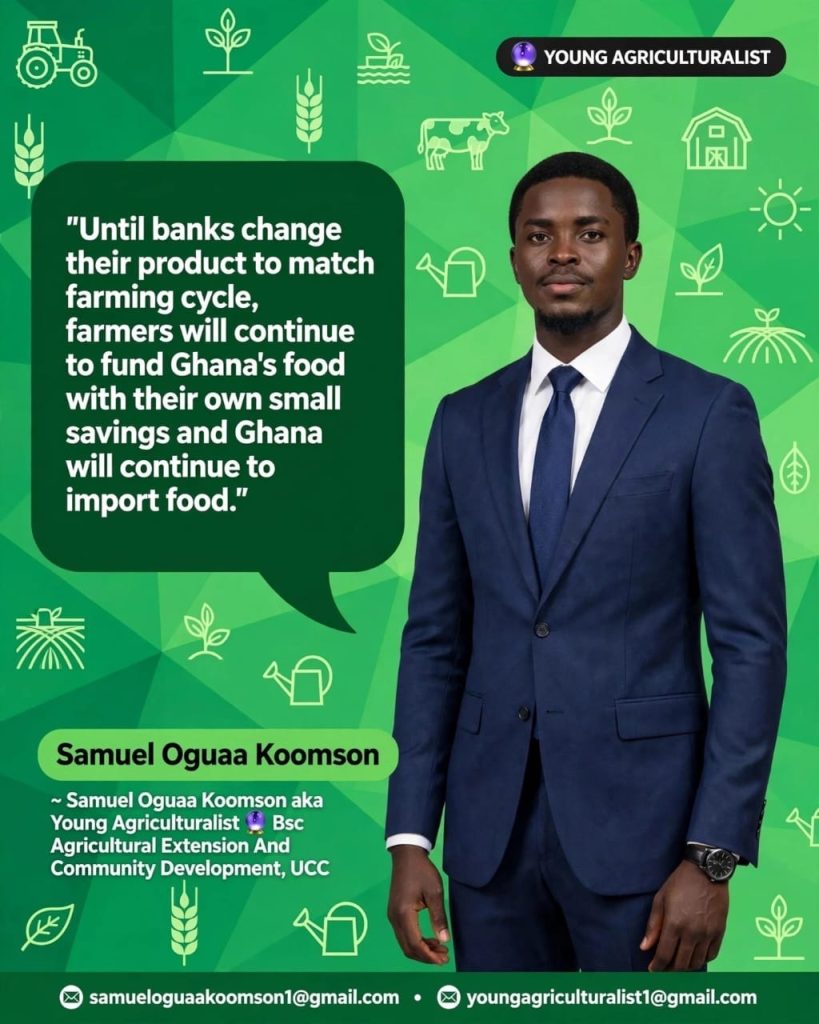
That is the argument advanced by Samuel Oguaa Koomson, also known as Young Agriculturalist, in an analysis submitted to GhanaMedia.
Koomson argues that the problem is not simply that farmers need more loans. Rather, he says financial products must be designed around the realities of agriculture — including weather risks, production cycles, harvest periods, market volatility and the absence of conventional collateral among many smallholder farmers.
Samuel Oguaa Koomson argues that Ghana’s agricultural financing system must better match farming cycles.
Agriculture Contributes Significantly, But Credit Remains Limited
Official Ghanaian government data support part of that argument. The Ministry of Food and Agriculture’s Feed Ghana Programme says agriculture contributes about 22% of Ghana’s GDP, while credit to primary agricultural production represented only 4.7% of total credit in 2024, up from 3.9% in 2023.
The Africa Development Bank has similarly highlighted the financing gap, noting that agriculture in Ghana accounts for a much larger share of economic activity than its share of commercial lending.
Why Agriculture Presents a Different Lending Challenge
Unlike many conventional businesses, agricultural enterprises can have long periods between investment and revenue. A farmer may spend money on land preparation, seeds, fertilizer, labour and other inputs months before receiving revenue from a harvest.
For perennial crops such as mango, cashew and oil palm, the period between investment and meaningful production can be considerably longer.
Koomson argues that conventional repayment structures can therefore place farmers under pressure when monthly repayments begin before their farms generate sufficient cash flow.
Why Ghanaian Banks Struggle to Finance Farmers and Agribusinesses 11
Some banks have already developed products that attempt to address this issue. For example, agricultural production loans can be structured around farming seasons, depending on the lender and type of crop.
Weather, Insurance and Market Risks
Agriculture exposes lenders and borrowers to risks that can be less predictable than those associated with many conventional businesses. Drought, excessive rainfall, pests, disease outbreaks and sudden price changes can significantly affect production and farmers’ ability to repay loans.
The Ministry of Food and Agriculture identifies low insurance penetration as one of the weaknesses in agricultural finance, reporting that fewer than 5% of Ghanaian farmers had insurance protection in 2024.
Ghana has also been pursuing mechanisms to reduce these risks. The Ghana Incentive-Based Risk-Sharing System for Agricultural Lending (GIRSAL) provides credit-risk guarantees to participating financial institutions to encourage agricultural lending.
Collateral Remains Another Obstacle
Many smallholder farmers do not possess the type of conventional collateral traditionally preferred by financial institutions. Land ownership and documentation can also be complicated, particularly where farmers operate under customary or informal arrangements.
Koomson argues that financial institutions should therefore make greater use of alternative financing structures, including credit guarantees, warehouse-receipt financing, contract farming, crop insurance and value-chain financing.
Financing the Entire Value Chain
Another major point in Koomson’s analysis is that financing a farmer without financing the infrastructure around the farmer can limit the impact of credit.
A producer may receive money for inputs but still struggle to transport, store, process or market the resulting harvest.
That is why value-chain financing has increasingly become part of agricultural-finance discussions.
Ghana’s Food-Import Challenge
The financing debate is also connected to Ghana’s continuing reliance on imported food.
Ghana Statistical Service data reported by Citi Newsroom show that Ghana spent more than GH¢36.5 billion on food imports in 2025, with processed cereal grains, frozen chicken and rice among the major import categories.
The World Bank’s 2026 AgriConnect Compact likewise identifies improving productivity, market access, finance and value addition as priorities for Ghana’s agricultural sector, with reducing food imports among its objectives.
What Could Improve Agricultural Lending?
Agricultural credit guarantees
Crop and weather insurance
Longer repayment periods linked to harvest cycles
Warehouse-receipt financing
Contract farming tied to confirmed buyers
Agricultural lending officers with sector-specific knowledge
Digital financing for smallholder farmers
Financing that covers multiple points in the agricultural value chain
Some of these mechanisms already exist in Ghana in various forms. GIRSAL, for example, provides guarantees to participating financial institutions to help reduce agricultural lending risks.
A Financing System Built Around Agriculture
Koomson’s central argument is that farming cannot always be financed using exactly the same structures used for salaried workers, traders or conventional businesses.
Agriculture has seasonal revenues, weather exposure, production cycles and supply-chain dependencies.
For Ghana to expand domestic food production, the financing system will need to account for those characteristics while also protecting financial institutions against avoidable risks.
As Koomson puts it: “Ghanaian banks want quick, safe, monthly repayment with land title. Ghanaian farming needs long, risky, seasonal repayment with harvest as collateral.”
The debate over agricultural finance therefore extends beyond farmers and banks. It touches food security, imports, employment, rural development and Ghana’s ability to build a stronger domestic food system.
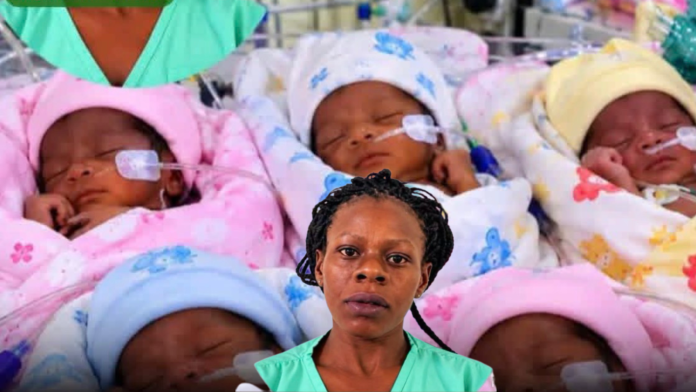
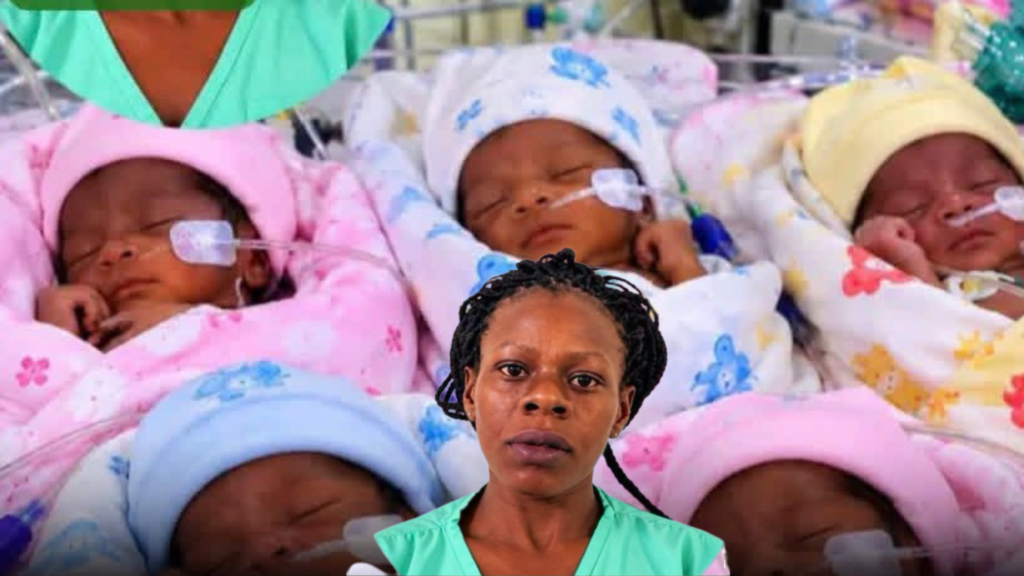
A devastating tragedy has struck a family in Juja, Kenya, after all five babies born to 28-year-old Mercy Kanini died following their premature birth.
Kenyatta National Hospital (KNH) confirmed on September 16 that the fifth and final surviving infant had died, one day after the other four newborns. The babies had been transferred from Thika Level Five Hospital to KNH for specialised neonatal care.
Mercy Kanini is mourning the loss of all five newborns after the final surviving quintuplet died at Kenyatta National Hospital.
The quintuplets were born extremely prematurely—at about 25 weeks of gestation—and had very low birth weights. KNH said the babies faced significant clinical challenges and received specialised care from a multidisciplinary neonatal team.
From extraordinary joy to devastating loss
Kanini had delivered four girls and one boy at Thika Level Five Hospital in what was described as a rare quintuplet birth. Earlier reports said the babies weighed roughly between 630 and 800 grammes, although reports have differed slightly on the precise figures.
The newborns were transferred to KNH because of their extreme prematurity and need for specialised neonatal intensive care.
Initially, one baby remained alive after the deaths of the other four. That final hope ended on September 16 when KNH confirmed that the fifth infant had also died.
KNH expressed its condolences to Kanini and her family, saying it recognised the profound pain of losing all five newborns.
What caused the deaths?
KNH has attributed the babies’ medical difficulties to their extreme prematurity and very low birth weights. The hospital has not, in the statement reported by Citizen Digital, alleged negligence or identified another specific cause of death.
This distinction is important because some political figures have subsequently questioned whether the initial facility had adequate equipment and medical personnel. Those are claims and criticisms that should not be presented as established causes of the deaths.
A family now mourning five children
The tragedy leaves Kanini and her husband, Evans Nyamhanga, mourning all five newborns only days after their arrival.
Earlier, Nyamhanga had described the birth as a blessing and appealed for support as the family prepared to care for the quintuplets.
The family is now facing an entirely different reality: mourning the loss of all five babies.
GhanaMedia Verdict: VERIFIED — The death of all five quintuplets has been confirmed by Kenyatta National Hospital and independently reported by multiple Kenyan news organisations.
Editorial note: GhanaMedia will not publish identifiable images of the newborns. Any children appearing in related graphics should have their faces fully blurred or otherwise obscured.
VERIFIED — ENTERTAINMENT DEVELOPMENT; REBRANDING CORROBORATED
Gospel musician Florence Obinim is reportedly moving away from the “Obinim” identity as she prepares for a return to gospel music, amid the highly publicised marital dispute involving her and Bishop Daniel Obinim.
Florence Obinim reportedly embraces the Lioness identity as she prepares for a gospel music comeback.
Recent reports indicate that Florence’s social-media branding has changed to Lioness Ministries, with promotional appearances also using the “Lioness” identity. YEN reports that the change follows months of marital tension and comes after Florence previously said she would be willing to drop the Obinim surname from her stage identity if her husband requested it.
The circulating report identifies her new stage identity as “Akua Lioness”, while available reporting more directly confirms the broader Lioness Ministries/Lioness rebrand. GhanaMedia therefore treats “Akua Lioness” as the reported branding rather than an independently confirmed formal name change.
Florence is also expected to return to gospel music, with plans reportedly underway for new songs in the coming months.
The development comes amid the Obinim marital saga
The rebranding follows months of public discussion surrounding Florence and Bishop Daniel Obinim’s marriage. Reports in September 2026 said Florence’s family had initiated a traditional divorce process, while Obinim has publicly discussed the breakdown of the relationship.
In a recent audio reported by Pulse Ghana, Obinim claimed that he had relationships with other women during the marriage. Those claims are allegations made by Obinim himself and have not been independently verified.
Three controversies that have shaped Obinim’s public profile
1. The 2016 church flogging case
Obinim and two pastors were prosecuted after footage showed two teenagers being publicly flogged at a church service. In 2018, an Accra Circuit Court fined the three a combined GH¢12,000 over the assault.
2. The 2020 false-news and forgery case
In May 2020, Obinim was arrested and charged with publication of false news and forgery of a document. He was granted GH¢100,000 bail, with police saying investigations were ongoing at the time. The charge should not be presented as a conviction.
3. The strobe-light and siren case
In February 2022, an Akropong Magistrate Court fined Obinim and his driver GH¢1,200 after they were found guilty of illegally using strobe lights and a siren on a vehicle. The court also ordered the unauthorised equipment removed.
These episodes are part of the documented public controversies surrounding Obinim, but they are separate from Florence’s current musical rebranding and should not be used to imply anything about her own conduct.
A new chapter for Florence?
For Florence, the reported rebrand could represent a significant shift in how she presents herself publicly after years of being strongly associated with the Obinim name.
Her existing biography has long identified her as a gospel musician and preacher, while her music career predates the current marital crisis.
With the Lioness identity now appearing across her promotional presence, attention will turn toward the music itself and whether her planned comeback marks a new chapter in her career.
GhanaMedia Verdict: PARTLY VERIFIED — Lioness rebrand corroborated; “Akua Lioness” and specific comeback-release details require further confirmation.
Veteran Nigerian actor and film executive Olu Jacobs has died at the age of 84, with his family announcing his passing on Wednesday, September 16, 2026.
His son, Olusoji Jacobs, announced the death on Instagram on behalf of the family. The family identified the actor by his full name, Oludotun Baiyewu Jacobs (MFR), and gave his dates as July 11, 1942 – September 16, 2026.
Veteran Nigerian Actor Olu Jacobs Dies at 84 15
The family described him as a beloved husband, father, grandfather and uncle, referring to him as “The Lion of Lufodo.” It also appealed to bloggers and social media influencers to respect the family’s privacy during the mourning period.
A Career Spanning More Than Five Decades
Olu Jacobs was one of the most recognisable figures in Nigerian theatre, television and film.
He trained at the Royal Academy of Dramatic Art in London before building a career that included British television, international productions and Nigerian cinema. He subsequently became one of the veteran figures associated with the development of Nollywood.
His career earned him several major honours, including the Africa Movie Academy Award for Best Actor in a Leading Role in 2007 and Nigeria’s national honour of Member of the Order of the Federal Republic (MFR).
Jacobs and his wife, veteran actress Joke Silva, were also closely associated with the Lufodo Group and Lufodo Academy of Performing Arts.
Family Confirms Death After Previous False Reports
The confirmation comes after years in which false reports about Jacobs’ death circulated on social media.
In 2024, his family publicly rejected another death rumour, with his son Olusoji confirming that the actor was alive.
This time, however, the announcement has come directly from his family and has been independently reported by multiple Nigerian and international media organisations.
No cause of death was provided in the family’s announcement, and GhanaMedia will not speculate about the circumstances of his passing.
GhanaMedia Verification
VERDICT: VERIFIED — DEATH CONFIRMED BY FAMILY AND MULTIPLE CREDIBLE NEWS OUTLETS.
The supplied TRT Afrika report is consistent with the family’s announcement and multiple independent reports published on September 16, 2026. The actor died at 84, and the death was announced by his son, Olusoji Jacobs.
Olu Jacobs leaves behind a legacy spanning theatre, television and film and several generations of African audiences.
Emma Watson’s decision to step away from acting was not prompted by a failed film or a Hollywood scandal. In a 2025 interview, the former Harry Potter star explained that years of intense work, public scrutiny and the promotional demands of filmmaking had left her needing to rebuild her life away from the spotlight.
Emma Watson Explains Why She Stepped Away From Acting 17
Watson, who became internationally famous as Hermione Granger, has not appeared in a feature film since Greta Gerwig’s Little Women, released in 2019. She has repeatedly described the break as a period of personal rebuilding rather than a permanent retirement from acting.
From Hermione to Hollywood’s Highest-Profile Stars
Watson was cast as Hermione while still a child and went on to appear in all eight Harry Potter films.
Her later career included films such as The Perks of Being a Wallflower, The Bling Ring, The Circle and Beauty and the Beast.
The 2017 Disney blockbuster became one of the biggest commercial successes of her career. Contemporary reports said Watson received about $3 million upfront, with box-office incentives potentially taking her total compensation to approximately $15 million.
Beauty and the Beast ultimately surpassed $1.2 billion worldwide, making the reported $15 million potential compensation figure possible under the reported bonus arrangement.
Then She Stepped Away
Watson’s final feature-film role to date was Meg March in Little Women.
In her 2025 interview with Hollywood Authentic, she explained that the problem was not simply acting itself. She said she profoundly misses the creative side of acting but does not miss the pressure surrounding the promotion and sale of films.
Watson described that promotional side as “soul-destroying”, while saying that performing itself could feel almost meditative.
She also explained that she had worked extremely hard for a long time and eventually felt that her personal life had “bottomed out.” Her response was to step away and rebuild what she described as the foundations of her life before deciding what would come next.
“Maybe the Happiest and Healthiest I’ve Ever Been”
The break has now lasted several years, but Watson has resisted describing herself as permanently retired.
In 2025, she said she still misses acting and the creative experience of being on set. At the same time, she said she is “maybe the happiest and healthiest” she has ever been after shedding some of the pressures associated with her public persona.
She has also explored other areas of creative and academic life, including writing and directing, while continuing her studies.
What the Viral Story Gets Wrong
Some versions of the circulating story overstate or simplify Watson’s financial history.
The frequently repeated claim that the Harry Potter films alone earned her $70 million is not consistently supported by major contemporary reporting; figures around $60 million have also been reported for the eight-film franchise.
Likewise, estimates of an $85 million net worth are third-party estimates rather than an officially disclosed figure and should not be presented as an established fact.
Most importantly, Watson has not announced that she has permanently quit acting. Her own comments indicate that she misses acting and remains open to creative work, while prioritising a healthier balance in her life.
GhanaMedia Verification
VERDICT: VERIFIED — CORE STORY CONFIRMED; SOME VIRAL FINANCIAL FIGURES REQUIRE CAUTION.
The central story is supported: Watson’s last feature film was Little Women in 2019, she subsequently took an extended break from acting, and in 2025 she publicly explained that the pressures surrounding the profession contributed to her decision to step back.
The financial figures and the claim that she permanently “walked away” from acting should be treated more cautiously.