DORiSA Consult has successfully hosted the second edition of its Business Advocacy Forum under the theme “Building Teams That Last: HR, Systems & Delegation for Sustainable Growth.”
Held online via Google Meet on Wednesday, September 9, 2026, the forum brought together business owners, managers, professionals and students to examine how SMEs can move from founder-dependent operations toward sustainable, systems-driven growth.
DORiSA Consult Holds 2nd Business Advocacy Forum on Building Teams That Last 2
Leadership Must Empower Through Delegation
Dr. Samuel Kodzo Senyoh, a Certified Leadership Coach and Management Consultant, addressed leadership and effective delegation.
He stressed that delegation should go beyond simply assigning tasks. Leaders, he explained, must understand their employees’ skills, empower them and create an environment where team members feel respected and valued.
He linked leadership to vision, strategic direction, values and culture, while describing delegation as the mechanism through which responsibility and organisational capability are distributed.
Aligning People With the Market
Dr. Nancy Erskine-Sackey, Lecturer in Marketing and Entrepreneurship at KAAF University, focused on People and Market Alignment.
She challenged business owners to consider whether their internal teams are prepared to support growth when customer demand increases.
She encouraged SMEs to recruit the right people, give them responsibility and make employees feel genuinely connected to the business and its objectives.
Sustainability Requires Strong Systems
On Institutional Leadership and Sustainability, Dr. Cynthia Sena Kpeglo-Freiku, Executive Secretary of Vice Chancellors Ghana, highlighted risk management, ethical conduct, administrative excellence, accountability and innovation.
She emphasised the importance of building HR capacity and creating systems that allow excellence to be repeated rather than depending solely on individual leaders.
Her central message was that sustainability should become a way of operating, with institutions deliberately developing people and systems capable of functioning beyond the founder or current leadership.
Governance Builds Business Confidence
The final technical presentation came from Mr. Benjamin Akyena Brantuo, Government Relations Specialist at International Justice Mission.
He discussed government relations, SME governance and stakeholder relations, explaining that businesses need more than a good idea to achieve sustainable growth.
He described governance as providing the structure through which a business is managed and argued that effective governance can help an organisation continue operating even when its founder is absent.
A Focus on Sustainable SME Growth
The forum concluded with a panel discussion and live business counselling session moderated by Dr. Doris Aryee. A vote of thanks was delivered by Ms. Elizabeth Nartey, followed by a closing prayer from Mrs. Doreen Ada Adzewoda.
DORiSA Consult said the second edition reinforced its focus on Strategy, Systems and Growth, with emphasis on People, Process and Performance.
The organisation also announced the third edition of the Business Advocacy Forum for Wednesday, October 14, 2026, at 7:00 PM, under the theme “From Visibility to Sales: Digital Positioning Strategies for SMEs in 2026.” The session is expected to focus on helping SMEs convert online visibility into measurable sales growth.
Telecel Ghana Chief Executive Officer Ing. Patricia Obo-Nai has called for a stronger culture of integrity, ethical leadership and social responsibility, saying technical competence alone is not enough to build lasting trust and value.
Telecel CEO Patricia Obo-Nai Champions Integrity in Leadership 4
Obo-Nai made the remarks while speaking at the 2026 Commencement Ceremony of Palm University College at Manya Jorpanya, Shai Hills. Palm University confirms the ceremony took place on September 12, 2026, with Obo-Nai serving as the guest speaker.
“Technical Expertise May Open the Door”
Addressing graduates under the theme “The Quest to Educate Ethical and Excellent Leaders in Ghana,” Obo-Nai emphasised the responsibility of educational institutions to develop graduates who can make ethical decisions and understand the impact of their actions.
“Technical expertise may open the door, but integrity is what sustains trust, builds brands and creates lasting value,” she said.
She argued that investors want people who can be trusted with their resources, while employers increasingly require not only technical ability but also sound judgement, discipline and character.
Obo-Nai further said ethics should be intentionally incorporated into education, reinforced through leadership examples and reflected in everyday decision-making.
Palm University Emphasises Ethical Leadership
Palm University College Founder and President Dr. Peter Carlos Okantey said the institution was established around the belief that Ghana’s development challenges extend beyond skills shortages to include ethical leadership.
He urged graduates to apply the integrity, leadership and excellence developed during their academic journey as they enter professional and public life.
Palm University College says its mission is to produce ethical and excellent leaders with integrity for corporate, national and continental creativity, innovation, service and sustainability.
The university also highlighted initiatives including its Centre for Ethical Leadership, Palm Corporate Mentoring Programme and Palm GreenLab Innovation and Incubation Lab as mechanisms for connecting classroom learning with real-world impact.
Telecel Introduces Ethical Leadership Award
During the ceremony, Obo-Nai announced the Telecel Award for Excellence and Ethical Leadership.
Sponsored by Telecel Ghana, the annual award will recognise a graduating student who combines strong academic performance with sound judgement, integrity, responsibility and service.
Telecel Ghana separately confirmed that Obo-Nai announced an annual award for the best student in ethical leadership as part of the company’s support for developing the next generation of leaders.
Valedictorian Calls for Accountability
One of the ceremony’s two valedictorians, Dr Alex Osei, who graduated with an MSc in Services Management and Leadership, also reflected on the importance of ethical decision-making.
He described ethical leadership as making the right choice even when there is no external pressure to do so, while emphasising transparency, equity and accountability.
The ceremony brought together university leadership, faculty, students, parents, traditional leaders, industry partners and other members of the Palm University community.
The event marked the graduation of Palm University College’s Class of 2026, including the institution’s first graduating cohort from its School of Graduate Studies.
Leadership Beyond the Classroom
The message from the ceremony centred on the idea that professional success should be accompanied by character and responsibility.
For Obo-Nai, the challenge is not simply to produce graduates who can perform their jobs, but leaders whose decisions can strengthen organisations and contribute positively to society.
Follow GhanaMedia on X: @GhanaMedia123 for more verified business, education and leadership stories.
Johannesburg, 07 September 2026 – Rising savings, increasing cross-border payment activity and growing participation in formal financial systems are emerging as some of the clearest indicators yet of substantial pent-up demand for economic activity across the continent.
The latest numbers from Standard Bank, the parent company of Stanbic Bank Ghana, show a buildup of deposits by 12% to R2.5 trillion, while the value of domestic electronic payments grew by 11% and cross-border payment values increased by 7%. Serving 19.5 million active clients across 21 African countries, the bank says these trends point to a continent where households are saving more, businesses are transacting more and trade corridors are becoming increasingly active.
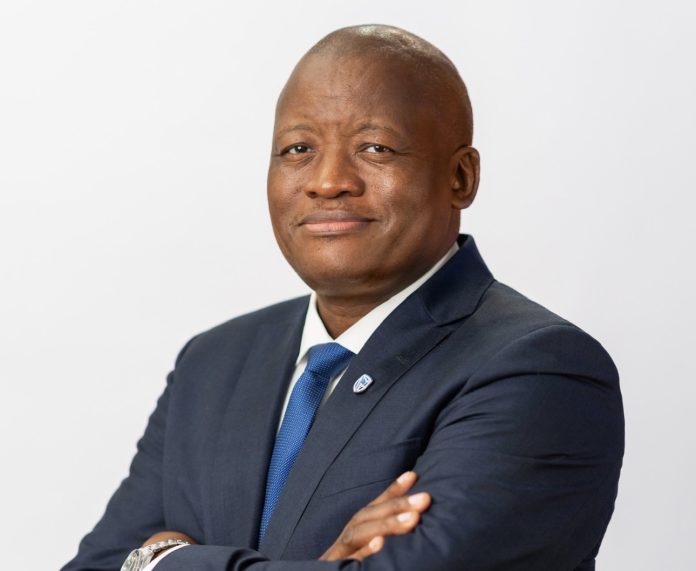
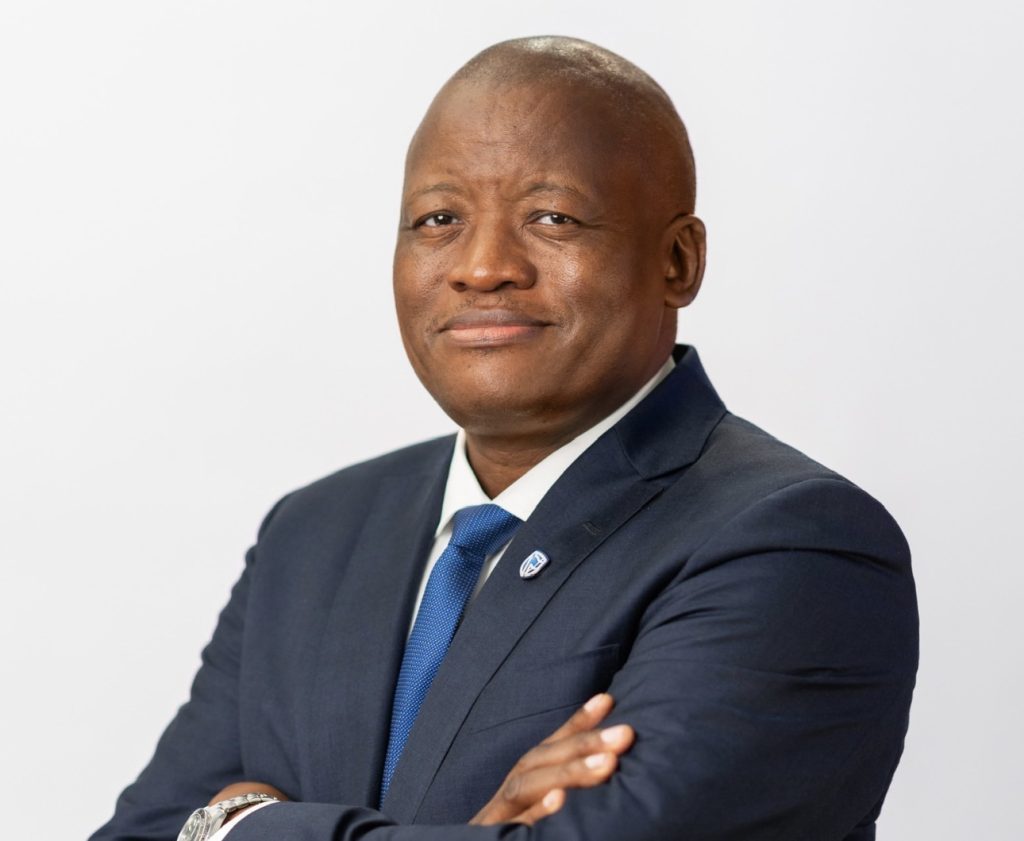
Lungisa Fuzile, Chief Executive, Standard Bank, Africa Regions
As the African Continental Free Trade Area (AfCFTA) gathers momentum and digital connectivity continues to expand, payment flows and savings behaviour are increasingly reflecting the emergence of deeper and more integrated African economies.
Lungisa Fuzile, Standard Bank Chief Executive for Africa Regions says: “What we are seeing across many markets is clear evidence of economic momentum. As more people participate in the formal financial system, as businesses trade across borders and as savings pools deepen, the foundations for sustainable growth become stronger. These are indicators of expanding economic activity and increasing confidence in Africa’s future. Our footprint spans markets that collectively account for more than 2/3 of Africa’s GDP, giving us a unique view of changing economic patterns across the continent. From growing domestic consumption and business formation to expanding trade and investment flows, the signals point to increasing economic participation and confidence.”
Rapid population growth and urbanisation, significant infrastructure investment requirements, increasing trade and capital flows, and the ongoing evolution of the continent’s financial services landscape points to a continent that is one of the fastest-growing major regions in the world.
The value of domestic electronic payments processed through Standard Bank increased by 11%, while cross-border payment values rose by 7%, reflecting growing commercial activity both within countries and across borders. The bank currently maintains a 19% market share of cross-border payments across its African markets, providing a unique window into the movement of goods, services and capital across the continent.
“The African Continental Free Trade Area is often discussed in policy terms, but its impact is increasingly visible in commercial activity. Every payment reflects a transaction. Every transaction reflects business activity. And every new trade corridor creates opportunities for growth, investment and job creation. The steady rise in payment flows suggests economic integration is gradually becoming a lived reality for African businesses,” says Fuzile.
At the same time, the growth in deposits is emerging as one of the strongest indicators of Africa’s growing economic resilience. Deposits increased to R2.5 trillion, outpacing loan growth of 7%, creating larger pools of domestic capital that can be directed towards economic development.
Fuzile says, “When households save, when entrepreneurs build businesses and when companies invest for growth, they create the foundations for stronger economies. Across many African markets we are seeing increasing evidence of exactly this kind of participation.”
The opportunity is also being supported by rising investment in the infrastructure needed to unlock long-term growth. Since 2022, Standard Bank has mobilised R328 billion in sustainable finance, including R50.6 billion during the first six months of 2026, supporting projects across renewable energy, water, agriculture, transport and broader economic inclusion initiatives.
These investments are helping address some of the structural challenges that have historically constrained growth, while creating the conditions for greater regional trade, productivity and investment.
“Africa’s next growth phase will be driven by improved infrastructure networks coupled with increasing economic participation by larger numbers of Africans, both men and women. There is considerable pent-up demand across the continent, not only for banking services but for trade, housing, energy, logistics, digital connectivity and entrepreneurship. As barriers to commerce continue to fall and economies become more connected, we expect that demand to translate into even greater levels of economic activity, investment and growth,” says Fuzile.
Ghana’s growth story remains one of undeniable resilience. With the economy expanding by 5.8% in 2025 and projected to maintain steady growth through 2027, the macroeconomic picture is brightening. Inflation is easing, the policy rate is lowering, and stability is steadily returning.
Yet, beneath these encouraging indicators lies a structural vulnerability that threatens to artificially cap the country’s long-term potential: an aging, chronically underfunded infrastructure base.
The 2026 Infrastructure Report Card, developed by the Ghana Institution of Engineering, delivered a sobering D3 grade (57%) for the nation’s infrastructure. This reflects a story of stagnation rather than outright collapse.
Rexford Kissiedu-Addi, Senior Vice President, Power & Infrastructure, Corporate and Investment Banking, Stanbic Bank Ghana
Despite years of public spending, inadequate maintenance, weak asset management, and chronic underfunding have taken their toll, leaving roads, health facilities, and rail networks in particularly poor condition.
The scale of the shortfall is formidable. According to the World Bank’s Ghana Sustainable Cities Strategy, Ghana requires an estimated US$37.2 billion annually in infrastructure investment to meet long-term development objectives. Historically, the nation has fallen drastically short; between 2010 and 2020, combined public and private infrastructure investment hovered around merely 5% of GDP.
Today, the African Development Bank (AfDB) places Ghana’s overall investment financing gap at roughly 9% of GDP, a deficit exacerbated by high public debt, limited domestic revenue, and tighter global financial conditions that restrict access to affordable capital.
The Ultimate Economic Multiplier
Infrastructure is not merely a budgetary line item; it is the foundational platform upon which every other sector of the economy performs. Reliable power keeps factories operational and cold chains intact.
Modern roads and railways slash the cost of moving goods, directly connecting farmers to eager markets. Efficient ports and robust telecommunications dictate whether Ghanaian businesses can successfully compete on the regional and global stage.
When these vital systems underperform, the hidden costs ripple through the economy via higher production expenses, stunted business scalability, and communities cut off from opportunity.
Studies consistently show infrastructure investment generates significant multiplier effects through higher productivity, employment, and lower transaction costs.
For Ghana, closing our infrastructure gaps, particularly in water, sanitation, power, and transport, is not just about modernization. It is a critical prerequisite for translating projected GDP growth into broad-based, inclusive prosperity, ensuring the economy’s momentum does not stall against a wall of structural bottlenecks.
Strategic Reforms and Innovative Financing
Recent fiscal consolidation measures have contributed to improving macroeconomic stability and investor sentiment. This consolidation, underpinned by successful debt restructuring and IMF program progress, is yielding renewed investor confidence, credit rating upgrades, and a stabilized cedi. Concurrently, the National Infrastructure Plan sets a bold ambition to transform the country’s landscape by 2047.
However, ambition alone cannot bridge a 9%-of-GDP financing gap, nor can any single government fund a US$37 billion annual requirement exclusively from the public purse. The path forward requires a fundamental shift in how we fund multi-decade assets, moving away from expensive, short-term external borrowing toward long-term, patient capital.
Achieving this requires mobilizing capital from multiple sources in concert. First, Ghana must broaden its domestic revenue base and deepen local currency capital markets, allowing infrastructure to be increasingly financed in cedis to mitigate foreign exchange risks.
Furthermore, structured public-private partnerships (PPPs) and blended finance instruments are critical. By combining development finance with commercial capital, we can de-risk private investment in early-stage or lower-return projects—like rural energy access and sanitation—effectively easing the burden on the public balance sheet.
Crucially, the country must leverage commercial and syndicated bank financing to empower the large indigenous and multinational contractors building our productive infrastructure. While international investment conferences regularly generate billions in pledges, the true challenge lies in execution.
Ghana must aggressively build a robust pipeline of bankable, well-structured projects to ensure that financial commitments are rapidly converted into concrete developments.
The Role of Financial Institutions in Driving Growth
Turning ambitious infrastructure blueprints into reality requires the capital mobilisation, structuring expertise and risk-management capabilities that financial institutions and development partners can provide. This is a responsibility Stanbic Bank Ghana embraces deeply, anchored by a guiding belief: “Africa is our home, we drive her growth.”
Stanbic has consistently demonstrated this commitment by financing strategic projects that catalyse Ghana’s industrialization.
A prime example is the financial backing provided to Genser Energy for the development of vital gas transportation infrastructure, which has significantly expanded reliable energy supply to the nation’s mining and industrial sectors. By empowering such critical projects, Stanbic is actively strengthening the foundations for job creation and private sector competitiveness.
These capabilities extend far beyond traditional lending. Leveraging the balance sheet strength and pan-African network of the Standard Bank Group, Stanbic is uniquely positioned to advise on project structuring, helping sponsors design bankable initiatives that attract diverse capital.
Whether it is supporting the government and private investors in developing sustainable PPP models, providing essential trade and working capital for local contractors, or spearheading local currency financing in the capital markets, Stanbic offers comprehensive solutions tailored to the complexities of large-scale infrastructure delivery.
Executing the Vision for Tomorrow
Ghana stands at a genuine inflection point. Recent macroeconomic stabilization has created the breathing room necessary for ambitious planning, while the National Infrastructure Plan offers a clear, long-term destination. The scale of the financing gap is daunting, but it is well quantified and thoroughly understood.
What remains is the rigorous work of execution: optimizing domestic revenue, structuring commercially viable PPPs, and mobilizing the blended and commercial capital needed to transform a formidable shortfall into funded, delivered assets.
Financial institutions possessing the regional expertise and local dedication to orchestrate this capital are indispensable to the journey ahead. Through collaborative effort and disciplined investment, we can build the enduring physical networks that will underpin Ghana’s sustained economic transformation for generations to come.
In a move to promote environmental sustainability and responsible waste management, Stanbic Investment Management Services (SIMS) has partnered with the Prempeh College 1982 Year Group to support the installation of 60 waste bins across the school’s campus. The initiative is aimed at fostering a cleaner learning environment while encouraging students to develop responsible waste disposal habits and a stronger sense of environmental stewardship.
Presenting a donation of GHS30,000 to the group, Managing Director of SIMS, Kwabena Boamah, said the support reflects the company’s commitment to creating value beyond investment management by investing in communities and initiatives that deliver lasting social impact.
Kwabena Boamah, MD, Stanbic investment Management Services with Joseph Osei, President of the 1982 Year Group(Center) with members of their teams.
He noted that SIMS believes true investment goes beyond financial returns and extends to people, communities and the environments in which they live, learn and grow. He added that the company has consistently supported social impact initiatives over the years, including healthcare interventions, neonatal equipment donations and the sponsorship of a community health post project in Horsita.
According to Mr. Boamah, the waste management initiative is intended not only to improve sanitation on campus but also to encourage students to take greater responsibility for their environment and adopt sustainable waste disposal habits. SIMS is also encouraging the adoption of simple waste segregation practices to strengthen the long-term impact of the project.
Receiving the donation on behalf of the year group, President of the Prempeh College 1982 Year Group, Francis Osei, thanked SIMS for supporting the school’s environmental agenda. He highlighted ongoing efforts by alumni and the school to strengthen Prempeh College through a five-year strategic plan aimed at enhancing academic excellence, discipline and student development.
He said the waste management project aligns with the school’s broader objective of nurturing responsible citizens, noting that environmental responsibility plays an important role in shaping discipline and leadership among students.
Also speaking at the ceremony, Immediate Past Senior Prefect of Prempeh College, Ishmael Edusei, described the donation as a meaningful contribution to the school’s development. He noted that the support demonstrates the power of collaboration between institutions and alumni and serves as an example of the impact that giving back can have on future generations.
The initiative is expected to contribute to a cleaner learning environment while reinforcing a culture of environmental stewardship across the school community, reflecting Stanbic Investment Management Services’ commitment to supporting sustainable development and creating lasting value in the communities it serves.
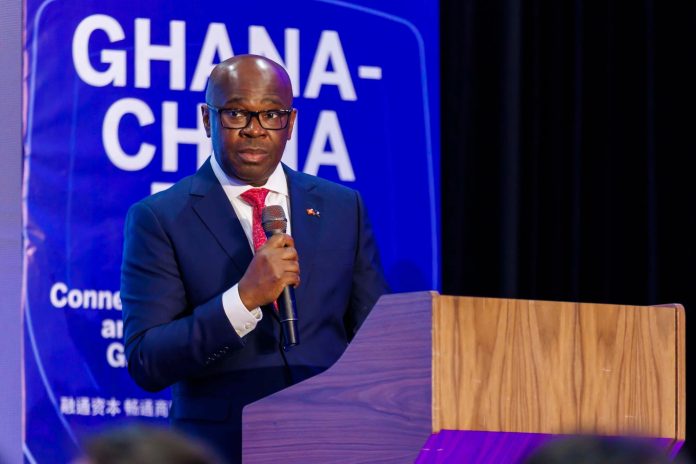
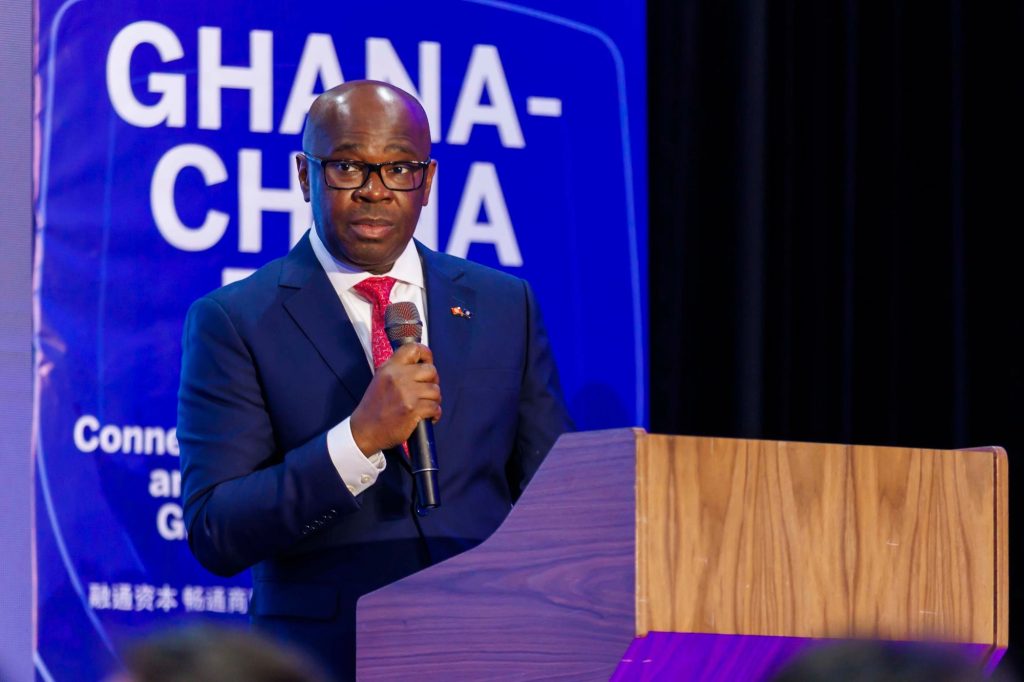
Businesses trading between Ghana and China could benefit from faster and potentially lower-cost payment processing following Stanbic Bank Ghana’s introduction of direct access to China’s Cross-Border Interbank Payment System (CIPS), according to Stanbic Bank Ghana Chief Executive Kwamina Asomaning.
Kwamina Asomaning, Chief Executive, Stanbic Bank Ghana Ltd.
Asomaning made the remarks at the Ghana-China Day in Accra, where stakeholders discussed ways to strengthen financial and commercial connections between the two countries. The event was organised by Stanbic Bank Ghana in partnership with the Industrial and Commercial Bank of China (ICBC).
A More Direct Route for Ghana-China Payments
Asomaning said CIPS gives eligible businesses a more direct route to settle transactions in Chinese yuan (RMB) with Chinese counterparties.
The system can reduce reliance on correspondent and intermediary banks, potentially helping businesses reduce delays and transaction costs associated with traditional payment routes.
CIPS is a wholesale payment infrastructure authorised by the People’s Bank of China for cross-border RMB clearing and settlement. Stanbic Bank Ghana became the first bank in Ghana to offer clients direct access to CIPS after receiving approval from the Bank of Ghana.
Stanbic Bank Ghana says eligible RMB payments submitted with complete documentation by 2:00 p.m. GMT can be processed for next-business-day settlement, subject to regulatory and compliance requirements.
China Remains Ghana’s Major Import Source
The development comes as commercial ties between Ghana and China remain significant.
Ghana Statistical Service data show that China accounted for 22.3% of Ghana’s total imports in 2024, making it the country’s largest import source.
Asomaning said the relationship should move beyond the traditional focus on goods and infrastructure towards areas including investment, manufacturing, technology transfer and higher-value services.
“The next chapter must be about building financial connectivity, productive capacity and shared value,” he said.
He also assured businesses operating along the Ghana-China corridor that Stanbic Bank would continue working to reduce financial barriers.
“When a business crosses a border, its bank should not become another border,” Asomaning said.
Stanbic–ICBC Partnership
Stanbic’s CIPS capability is supported by the relationship between its parent, Standard Bank Group, and ICBC.
Standard Bank and ICBC were jointly authorised in June 2026 by the People’s Bank of China to clear Renminbi in Africa, with the two institutions operating as the Renminbi Clearing Bank of Africa with capacity to clear RMB across 19 African countries.
ICBC Africa representative office CEO Li Li described Stanbic Ghana’s CIPS rollout as an important development for RMB business in Ghana and highlighted the longstanding Standard Bank–ICBC partnership in client services, product development, connectivity, staff exchanges and risk management.
How Businesses Can Use CIPS
Stanbic Bank Ghana says customers seeking to use the service must hold an account with the bank and can initiate transactions through a branch or the bank’s digital banking channels.
Select Chinese yuan/RMB as the payment currency.
Provide the required supporting documentation.
Submit eligible requests by 2:00 p.m. GMT for next-business-day settlement, subject to applicable requirements.
Stanbic also clarifies that CIPS does not replace SWIFT. It provides an additional payment route specifically for eligible RMB/CNY transactions, while other currencies continue to use existing payment rails.
Ghana-China Day
The Ghana-China Day was held under the theme “Connecting Capital, Commerce, and Opportunity in the Ghana-China Corridor.”
The gathering brought together stakeholders from Ghana’s financial and business communities to examine opportunities for deeper trade, investment and economic cooperation between Ghana and China. Stanbic Bank Ghana said the initiative is part of efforts to make transactions along the corridor simpler, faster and more efficient.
The introduction of direct CIPS access therefore adds a new RMB payment channel for eligible Ghanaian businesses, while the broader Ghana-China relationship continues to evolve beyond traditional merchandise trade.
Follow GhanaMedia on X: @GhanaMedia123 for more verified business, finance and economic stories.
“The Global Voice for Sickle Cell” is now home as recovery continues
EDITORIAL VERDICT: EXCLUSIVE — DIRECT STATEMENT TO GHANAMEDIA.NET; DISCHARGE NOT YET INDEPENDENTLY CORROBORATED
Bethlyn Arthur, known publicly as “The Global Voice for Sickle Cell,” has been discharged from hospital after almost a month in intensive care, according to a statement sent directly to GhanaMedia.net for publication.
Bethlyn Arthur Discharged After Nearly a Month in ICU During Sickle Cell Awareness Month 10
The announcement comes during Sickle Cell Awareness Month, adding a deeply personal dimension to Arthur’s longstanding advocacy for people living with sickle cell disease.
Arthur previously disclosed publicly that she had spent 17 days in ICU while battling what she described as one of the most severe sickle-cell crises of her life. Her account was published by Pulse Ghana on September 7.
“She Is Home”
According to the statement provided to GhanaMedia.net, Arthur has now returned home following the prolonged hospitalisation.
The statement describes the period as one of the longest and most difficult ICU admissions of her life and highlights the significance of being able to return to ordinary family life.
After weeks in hospital, Arthur can now return to her home, rest in her own bed and spend time with her children.
For someone who has spent years advocating publicly around sickle cell disease, the timing of the recovery is particularly significant.
September is recognised as Sickle Cell Awareness Month, a period dedicated to increasing understanding of sickle cell disease and supporting affected individuals and families.
From Advocate to Patient
Arthur’s recent experience has placed her advocacy message in an intensely personal context.
In her September 7 account, she wrote about the contrast between spending years encouraging sickle-cell warriors and suddenly finding herself as the patient in an ICU bed. She stressed that strength and advocacy do not make someone immune to the realities of sickle cell disease.
Arthur’s profile describes her as a certified midwife, public health professional, international speaker and patient-voice advocate whose work combines lived experience with healthcare and public-health advocacy.
A Message of Gratitude
In the statement sent to GhanaMedia.net, Arthur expressed gratitude to people who supported her throughout the difficult period.
That includes those who prayed, called, sent messages, donated blood, offered assistance, visited, shared her story and encouraged her family.
Her management team also said it will begin responding to journalists, bloggers, media personalities, health professionals, organisations and others who have requested interviews or personal visits, as Arthur rests and gradually regains her strength.
The statement emphasises that discharge is not the end of the journey.
Recovery continues, while Arthur’s advocacy message remains.
Turning Recovery Into Awareness
The statement encourages the public to transform the attention generated by Arthur’s experience into practical support for people living with sickle cell disease.
Know your genotype.
Donate blood when eligible.
Support people living with sickle cell disease.
Show compassion toward people experiencing health battles that may not be visible.
Arthur’s previous public advocacy has similarly focused on genotype awareness, blood donation, stigma, prevention and support for sickle-cell patients.
Her official website also describes Thrive Beyond Sickle Cell as an emerging initiative focused on patient empowerment, education, dignity, prevention and living a fulfilling life beyond the diagnosis.
“Today, Bethlyn Arthur Is Home”
The latest statement ends on a simple message of gratitude.
After weeks of intensive medical care, Arthur is now home with her family.
Her recovery remains ongoing, but the discharge represents an important milestone in a difficult period that unfolded while she was simultaneously serving as a public voice for sickle-cell awareness.
Today, Bethlyn Arthur is home.
And, as the statement to GhanaMedia.net puts it, for that, there is profound gratitude.
Follow GhanaMedia on X: @GhanaMedia123 for more verified health, human-interest and public-interest stories.
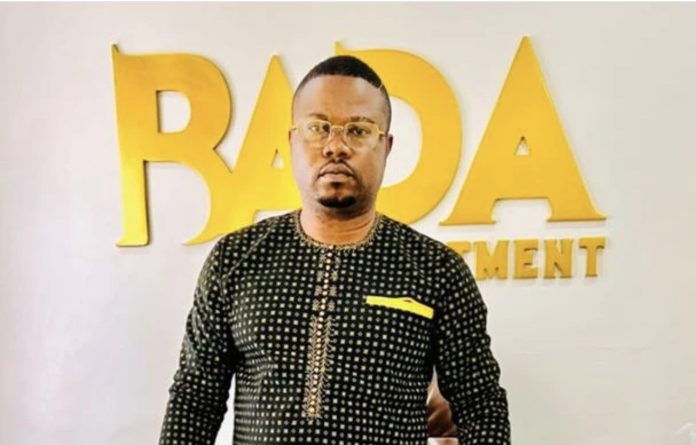
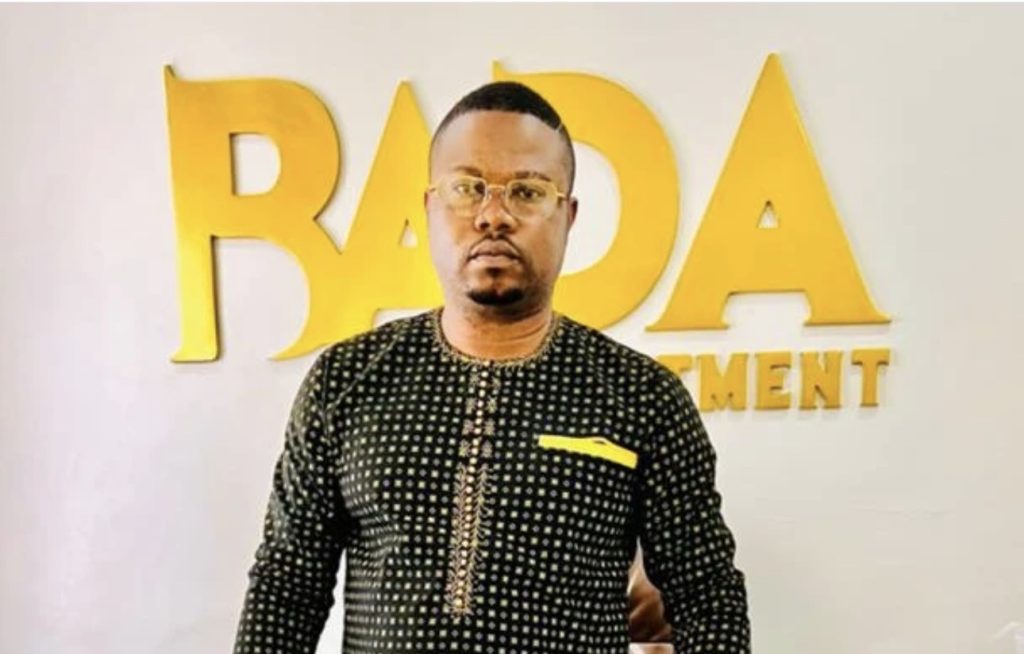
LOMÉ, Togo — King Sena Bada III, also known as BADA Yao Sena, is building a distinctive profile that brings together entrepreneurship, traditional leadership, creative production and community development.
KING SENA BADA III: ENTREPRENEUR, CHIEF & COMMUNITY BUILDER
Born in 1980 in Kpalimé Danyi-Elavagnon, Togo, BADA Yao Sena’s professional journey has developed across transit and customs, import-export, commercial representation, cultural production and community initiatives.
His story reflects a career built around practical learning, entrepreneurship, resilience and an increasingly international outlook.
From Practical Training to Entrepreneurship
According to his professional profile, BADA Yao Sena developed an early interest in practical and technical learning after completing his Baccalaureate, Series D.
In 2003, he undertook training in general electronics at Centrale Communication in Dekor, gaining technical knowledge and exposure to professional practice.
Between 2005 and 2006, he worked alongside his mother within HELENA TRANS. That experience introduced him more deeply to the realities of transit and customs and became an important foundation for his later entrepreneurial activities.
He subsequently pursued theoretical training in transit and customs at CAFPC-FORMATION-TDSCCI in 2007, complementing his practical experience with formal knowledge.
Building His First Enterprise
In 2006, BADA Yao Sena established Établissement Jéhovah Jireh, beginning an entrepreneurial journey that would later expand into several commercial areas.
The enterprise operated across transit and customs, import-export, general commerce and commercial representation.
The experience exposed him to the realities of running a business, including customer relationships, financial management, employee responsibilities and the challenges of sustaining commercial operations.
Those experiences, according to his profile, helped shape a philosophy based on patience, perseverance, prudence and adaptability.
From Entrepreneur to Traditional Leader
In 2014, BADA Yao Sena took on another significant responsibility when he was enthroned as traditional chief of Woudaoba-Aflao under the title FIATOR Sena BADA III.
The role placed him at the intersection of traditional authority and community development.
His stated responsibilities include promoting social cohesion, preserving cultural values, supporting peace and encouraging collective action within the community.
The combination of commercial entrepreneurship and traditional leadership has become a defining feature of his public profile.
Community Development as a Leadership Responsibility
As traditional leader, BADA Yao Sena has been associated with initiatives aimed at strengthening community organisation and improving living conditions.
According to the profile supplied for publication, his community-related initiatives have included support for facilities for traditional meetings and exchanges, efforts connected to electricity access, a water project and activities intended to strengthen unity within Woudaoba-Aflao.
The approach reflects his stated belief that traditional leadership should contribute to practical development rather than remain limited to ceremonial responsibilities.
The Creation of BADA Investment
In 2018, BADA Yao Sena established BADA Investment, marking another major stage in his professional development.
The company has developed interests in transit and customs, import-export, general commerce, commercial representation and artistic production.
BADA Investment’s official platform describes the company as operating across artistic creation and production, commerce and logistics, and import-export, with a stated focus on connecting markets and creating value across Africa and internationally.
Entering the Music and Creative Industry
BADA Investment later diversified into music production and the wider creative economy.
The company identifies music production, publishing, cultural events and artist development among its activities.
King Sena Bada III is also associated with Togolese artist Paki Chenzu as a producer. Music-distribution records for Paki Chenzu’s 2026 release “Tout ira mieux (Faut pas m’appeler)” identify BADA Investment as the production company and King Sena Bada III as producer.
The move into music represents a significant expansion of BADA Investment’s identity, combining commercial activity with cultural and creative entrepreneurship.
International Expansion
According to the professional profile supplied to GhanaMedia.net, BADA Investment expanded internationally with the opening of a company branch in Belgium on February 16, 2026.
The reported expansion forms part of an ambition to connect the company’s Togolese operations with European markets and develop international business relationships.
The move is consistent with BADA Investment’s stated international outlook and its positioning around trade, creative production and cross-border partnerships.
Publicly available records also contain references to a BADA Yao Séna working in the transit and customs sector in Togo, providing additional evidence of his longstanding connection to the industry.
The KSB Foundation and Social Responsibility
BADA Yao Sena’s activities extend beyond business and traditional leadership through the KSB Foundation.
According to his profile, the foundation focuses on four principal areas: social action, education, health and entrepreneurship.
The foundation reflects his stated belief that economic success should also generate social value and opportunities for communities.
A central element of BADA Yao Sena’s personal philosophy is self-reliance.
“Être soi-même, car personne ne viendra le faire à votre place. Faites les choses par vous-même sans toujours attendre quelqu’un.”
Translated broadly, the message encourages individuals to be themselves, take responsibility and act rather than constantly waiting for someone else to create opportunities for them.
The philosophy mirrors the trajectory presented in his professional biography: learning through experience, establishing businesses, taking on traditional responsibilities and expanding into new sectors.
Tradition, Business and Solidarity
King Sena Bada III’s profile is ultimately defined by the intersection of three areas: tradition, entrepreneurship and solidarity.
As an entrepreneur, he has built activities around transit, customs, commerce, import-export and creative production. As a traditional leader, he has taken on responsibilities connected to culture, peace and community organisation. Through social initiatives, he has also sought to connect his professional journey with community development.
His experience demonstrates how traditional institutions and modern entrepreneurship can exist alongside each other when leadership is directed toward both economic opportunity and community responsibility.
Looking Ahead
With BADA Investment continuing to develop its commercial and creative activities, BADA Yao Sena’s next chapter is increasingly international.
The company’s expansion into new markets, combined with its involvement in music production and its existing commercial activities, signals an ambition to build a broader African business platform.
For King Sena Bada III, the journey from practical apprenticeship and early entrepreneurship to traditional leadership, creative production and international business represents a continuing commitment to growth, independence and community impact.
Source note: This feature is based on the professional biography supplied to GhanaMedia.net, cross-checked against BADA Investment’s official website, public Togolese records and music-distribution records.
LOMÉ, Togo — King Sena Bada III, also known as BADA Yao Sena, is positioning himself at the intersection of entrepreneurship, traditional leadership, cultural development and social engagement through a growing portfolio of business and community initiatives.
His activities span transit and customs, import-export, commercial representation, music production, cultural events and community development, with his business interests increasingly extending beyond Togo.
Bada Investment
Independent information available online confirms BADA Investment’s operations in artistic production, transit, customs, commercial representation and international trade. The company’s website describes its vision as connecting markets from Africa to the wider world.
From transit and customs to BADA Investment
According to the profile provided for publication, BADA Yao Sena was born in 1980 in Kpalimé Danyi-Elavagnon, Togo.
His early professional experience developed through practical exposure to the transit and customs sector, including work alongside his mother at HELENA TRANS, before he undertook formal training in transit and customs.
In 2006, he established Établissement Jéhovah Jireh, with activities covering transit, customs, import-export, general trade and commercial representation.
That entrepreneurial foundation later developed into BADA Investment, established in 2018 according to the supplied profile.
Today, BADA Investment presents itself as a diversified enterprise covering artistic production, commerce and logistics, import-export and African textile trading. Its official website lists more than 15 countries covered, 200-plus projects and more than 50 partners.
Traditional leadership and community responsibility
BADA Yao Sena’s profile also extends beyond commercial activities.
The supplied biography states that he was enthroned in 2014 as traditional chief of Woudaoba-Aflao under the title FIATOR Sena BADA III.
His traditional role is described as involving cultural preservation, social cohesion, peacebuilding and community organisation.
The profile further associates his community activities with efforts aimed at improving infrastructure, supporting electricity and water access, creating community meeting facilities and strengthening unity among residents.
These responsibilities form part of a broader vision in which traditional leadership is viewed not simply as a cultural institution but also as a platform for community development.
Expansion into the creative economy
In recent years, BADA Investment has expanded into the creative sector.
The company says its artistic activities include music production, publishing and cultural events, while its website specifically identifies artist development and music production among its services.
King Sena Bada III is also identified as producer of Togolese artist Paki Chenzu.
That relationship has received independent confirmation through music-distribution records. A Paki Chenzu release issued in January 2026 lists BADA Investment as the production company and King Sena Bada III as producer.
The development reflects BADA Investment’s attempt to build a business model that combines commercial activity with support for African creative talent.
Building bridges between Africa and Europe
According to the supplied company profile, BADA Investment opened a branch in Belgium on February 16, 2026.
The claimed expansion is part of a broader strategy to connect its activities in Togo with international markets and create opportunities for partnerships between African and European businesses.
Independent Belgian company-registration search results also show an entity named “BADA INVESTMENT” CommV registered in Sint-Jans-Molenbeek in March 2026. However, the available registration result does not by itself establish that this entity is the Belgian branch described in the supplied biography.
The distinction is important as the company continues to build its international profile.
Supporting artists and cultural entrepreneurship
BADA Investment’s creative-industry strategy goes beyond simply producing music.
Its official website says the company provides project management, partnership development, recording, promotion, distribution and event-management support for artists.
The company has also been linked to wider creative-industry networks in Togo. Music In Africa recently reported that music professional NIHTAEL had worked with BADA Investment and King Sena Bada III, particularly around relationships with artists, producers, media professionals and cultural entrepreneurs.
This suggests an increasingly interconnected model in which music production, artist development, media and business partnerships operate alongside BADA Investment’s traditional commercial activities.
The KSB Foundation and social responsibility
Beyond commercial and cultural interests, King Sena Bada III is also associated with the KSB Foundation.
According to the supplied profile, the foundation focuses on four principal areas:
Social action
Education
Health
Entrepreneurship
The stated objective is to use entrepreneurship and community engagement as tools for creating opportunities and supporting future generations.
For King Sena Bada III, the approach represents an attempt to connect wealth creation with social responsibility.
A broader African entrepreneurial model
King Sena Bada III’s profile reflects a broader trend among African entrepreneurs who are combining commercial ventures with cultural and community responsibilities.
His activities bring together sectors that are often treated separately: logistics and international trade, traditional leadership, music production, artist development and social initiatives.
BADA Investment’s own positioning — “De la scène au marché, de l’Afrique au monde” — captures that ambition: moving from creative production and local commerce toward wider African and international markets.
The company’s work with artists such as Paki Chenzu and its stated focus on international partnerships demonstrate an effort to make the creative economy part of its wider business strategy.
Looking ahead
As BADA Investment develops its commercial and creative operations, King Sena Bada III’s trajectory illustrates an increasingly diversified approach to African entrepreneurship.
From his reported beginnings in transit and customs to business ownership, traditional leadership, music production and social initiatives, his career has increasingly brought economic activity and community responsibility together.
His stated ambition is not only to expand BADA Investment geographically, but also to contribute to stronger structures for African businesses, artists and communities.
If that vision continues to develop, King Sena Bada III’s story could offer an example of how entrepreneurship, traditional authority and cultural development can operate together within a modern African business ecosystem.
Media / Business Information
BADA Investment Lomé, Togo Website: bada-investment.com Email: [email protected] Music/Production: [email protected] Social Media: @badainvestment
Verification Note
GhanaMedia.net has independently checked publicly available information about BADA Investment and its creative activities. The company’s business sectors and its association with Paki Chenzu are supported by its official website and independent music-industry records.
Disclosure: The author is a former student of Dr. Abdul-Baasit Aziz-Bamba and subsequently served with him on the University of Ghana Council.
Introduction
The appointment of Dr. Abdul-Baasit Aziz-Bamba as Acting Director-General of the Value for Money Office, and therefore the inaugural head of the institution, presents an opportunity to focus not merely on an individual appointment, but on the broader governance challenge the new Office was created to address.
For years, Ghanaians have debated the prudence, affordability and implementation of major public projects. Public discussions surrounding Agenda 111, the National Cathedral, the Afari Military Hospital and several infrastructure projects across the country have often raised concerns about delays, cost overruns, project modifications and incomplete execution.
Regardless of one’s political perspective, these concerns point to a central governance question: how can the State ensure that every cedi committed to a public project delivers measurable and demonstrable value to citizens?
That question lies at the heart of the Value for Money Office.
The Legal Framework
The Value for Money Office derives its mandate from the Value for Money Office Act, 2026 (Act 1172). The Act establishes a statutory framework for the regulation, monitoring, coordination, promotion and conduct of value-for-money assessments, while also requiring scrutiny of procurement practices, cost-estimation methodologies, contract-management processes and expenditure controls within covered entities.
The law contains important enforcement mechanisms. Under sections 30 and 31 of Act 1172, monetary thresholds for mandatory value-for-money assessments are to be prescribed, and a covered entity may not award a public contract above the applicable threshold unless the Office has issued a Value for Money Certificate of Clearance. The Act further provides that such a certificate should not be issued unless the project is duly budgeted for and a funding commitment has been made. Significantly, a contract executed in breach of the certification requirement is rendered null and void and unenforceable against the Republic or the covered entity.
The legislation therefore goes beyond a purely advisory model. It creates a gatekeeping mechanism intended to bring value-for-money scrutiny forward in the project cycle, before contractual commitments are made and public funds become exposed. At the same time, section 12 protects the institutional independence of the Office by providing, subject to the Constitution and other enactments, that it is not subject to the direction or control of any person or authority in the performance of its functions.
Importantly, the Office operates within a broader accountability ecosystem that already includes Parliament, the Public Procurement Authority, the Auditor-General, the Internal Audit Agency and other oversight bodies. Its success will therefore depend not only on the powers granted by law, but also on effective coordination and the avoidance of institutional duplication.
The Value for Money Office and Its First Director-General: A Governance Opportunity. 14
Why Leadership Matters
Even the most carefully drafted legislation ultimately depends on the quality of its implementation. The Value for Money Office will be expected to scrutinise major public projects, challenge assumptions, test cost estimates, assess risks and insist on adherence to established procedures.
Such a mandate requires leadership that combines technical competence with independence of judgment, credibility and a commitment to due process. As the inaugural head of a new institution, Dr. Aziz-Bamba will also have the responsibility of helping to shape its culture, standards and reputation from the outset.
Why Dr. Aziz-Bamba Is Well Placed for the Role
Dr. Aziz-Bamba brings to the position a background that combines legal scholarship, public-law expertise and practical institutional experience.
Having interacted with him both as a lecturer and later within the governance structures of the University of Ghana, I observed a professional who approached institutional decision-making with diligence, attention to detail and a strong regard for process. His experience in legal administration and governance provides a useful foundation for a role that will require the careful evaluation of complex public-sector decisions.
However, the true measure of his suitability will not be personal reputation alone. It will be his ability to build systems, establish credible review processes, attract multidisciplinary expertise and ensure that the Office earns public confidence through the quality and impartiality of its work.
Risks and Conditions for Success
While the establishment of the Office is a welcome reform, its success should not be taken for granted.
First, the Office must enjoy genuine operational independence. A value-for-money assessment framework can only be effective if its findings are respected, even when they concern politically significant or high-profile projects. The statutory protection for the Office’s independence will matter only if it is reflected in institutional practice.
Second, the Office will require strong technical capacity. Value-for-money reviews demand expertise not only from lawyers and accountants, but also from engineers, quantity surveyors, procurement specialists, economists, project managers and other professionals.
Third, clear institutional coordination will be essential. The Office must complement, rather than duplicate, the work of existing oversight institutions. Clear lines of responsibility will help avoid unnecessary regulatory overlap and improve accountability.
Ultimately, a strong statutory framework and a capable Director-General will achieve little without adequate resources, institutional support and respect for the Office’s mandate.
A Timely Opportunity
The appointment of Dr. Aziz-Bamba should therefore be viewed as an opportunity to build a credible institution capable of improving public-investment outcomes in Ghana.
The reform is also timely in the context of Ghana’s wider fiscal-governance agenda. In its August 2026 Article IV report on Ghana, the International Monetary Fund called for stronger oversight of state-owned enterprises and public entities, merit-based board and management selection, enhanced procurement oversight and improved public-investment management. The report also specifically identified the operationalisation of the Value for Money Office as part of the effort to strengthen independent oversight of major public investments.
The real test will not be the credentials of the individual appointed. Rather, it will be whether the Value for Money Office succeeds in making it standard practice to ask difficult questions before public funds are committed: Is the project necessary? Is the proposed cost reasonable? Can the State realistically afford it? Can it be delivered within time and budget? Does it comply with the law and applicable procurement requirements? Will citizens receive value commensurate with the resources being invested?
If these questions become embedded in Ghana’s public-expenditure culture, the Office could make a lasting contribution to fiscal discipline, accountability and public trust.
Conclusion
The establishment of the Value for Money Office represents an important governance reform. Dr. Aziz-Bamba’s appointment deserves recognition, but the focus must now shift from the individual to the institution and from promise to performance.
For Dr. Aziz-Bamba, the task ahead is considerable, but so too is the opportunity. His most enduring legacy will not be measured simply by the number of reviews undertaken or reports issued, but by whether the Office helps change how Ghana conceives, approves and executes public expenditure.
If he can leave behind an Office whose independence is respected, whose judgments are trusted and whose scrutiny changes how Ghana commits public money, that will be a legacy worthy of the institution and the Republic.
Legal references: Value for Money Office Act, 2026 (Act 1172), particularly ss. 12, 30 and 31; IMF, Ghana: 2026 Article IV Consultation, Country Report No. 26/212 (August 2026).