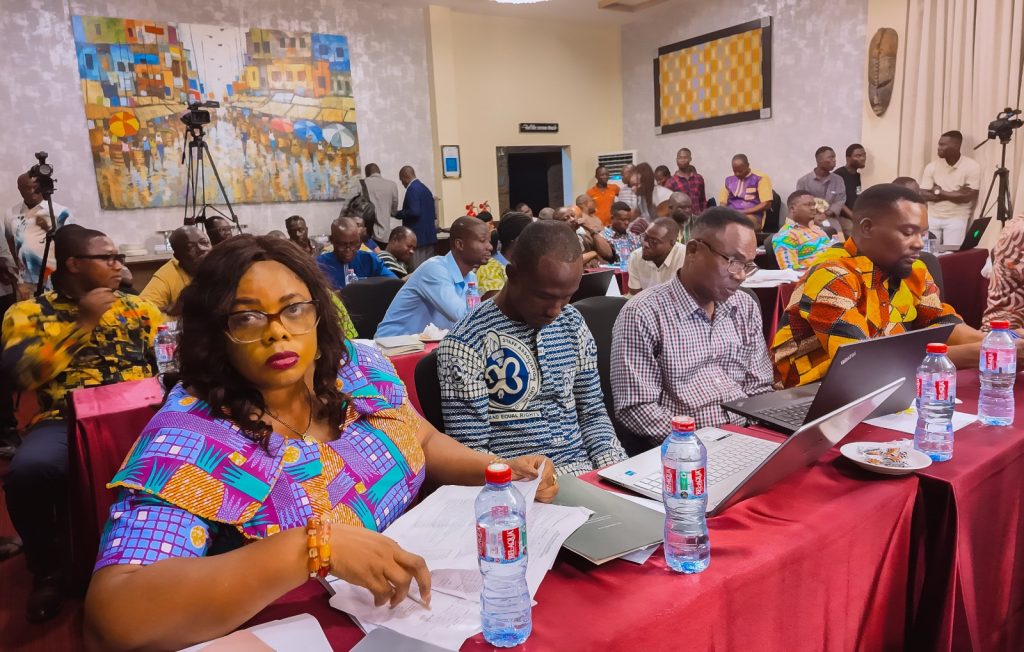
Accra, Ghana – 22 September 2026: emPLE Life Insurance Ghana LTD has been named Rising Brand of the Year 2025 – Life Category at the 6th Chartered Insurance Institute of Ghana (CIIG) Insurance Excellence Awards, held on 29 August 2026.
The recognition marks an important milestone for emPLE Life Insurance and reflects the company’s growing presence and commitment to delivering relevant, accessible and dependable life insurance solutions.
emPLE Life Insurance named Rising Brand of the Year at the 6th CIIG Insurance Excellence Awards 2
Commenting on the award, emPLE Ghana CEO & Country Head, Dr. Rafique Daudi, said:
“We are honored to receive this recognition. It belongs to our customers, employees, partners and shareholders who continue to believe in our vision. The award strengthens our commitment to delivering insurance solutions that empower people to achieve their aspirations.”
Guided by its brand promise, “Empowering People,” emPLE Life Insurance continues to focus on customer experience, innovation and solutions that help individuals, families and organisations protect what matters most and plan confidently for the future.
The company expressed its appreciation to the Chartered Insurance Institute of Ghana for the recognition and its continued contribution to professional excellence within Ghana’s insurance industry.
About emPLE Life Insurance Ghana LTD
emPLE Life Insurance Ghana LTD provides life insurance solutions designed to support the protection and financial security of individuals, families and organisations.
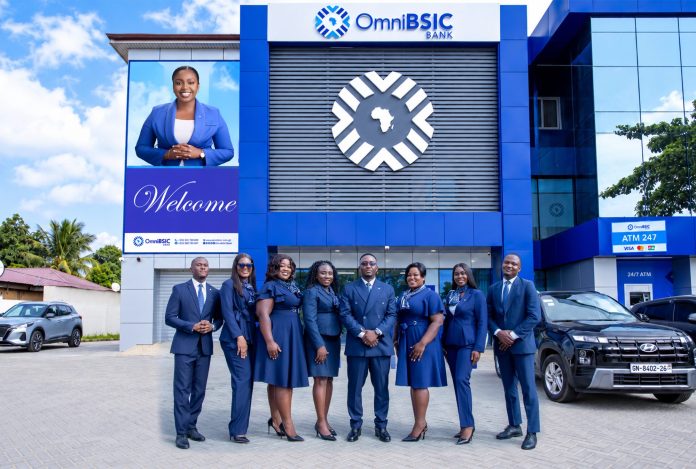
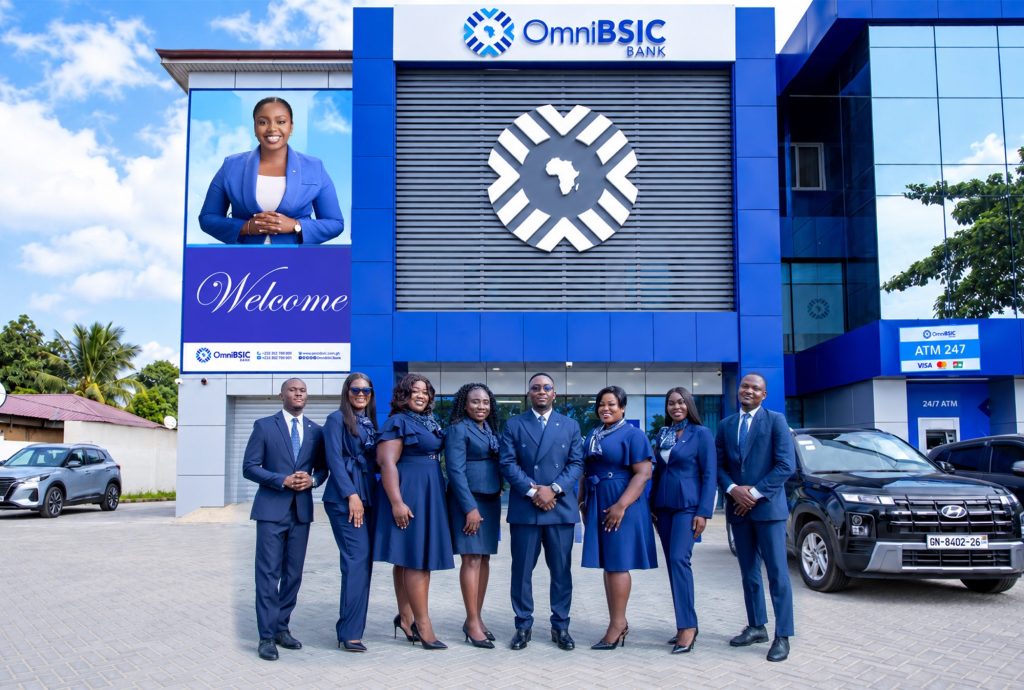
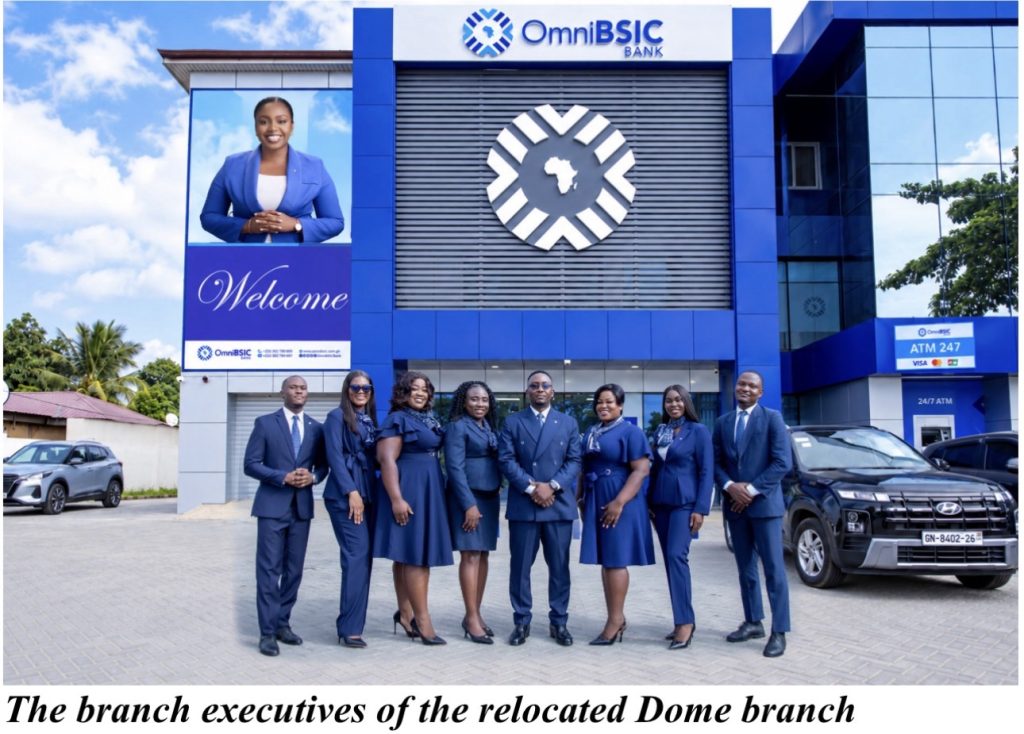
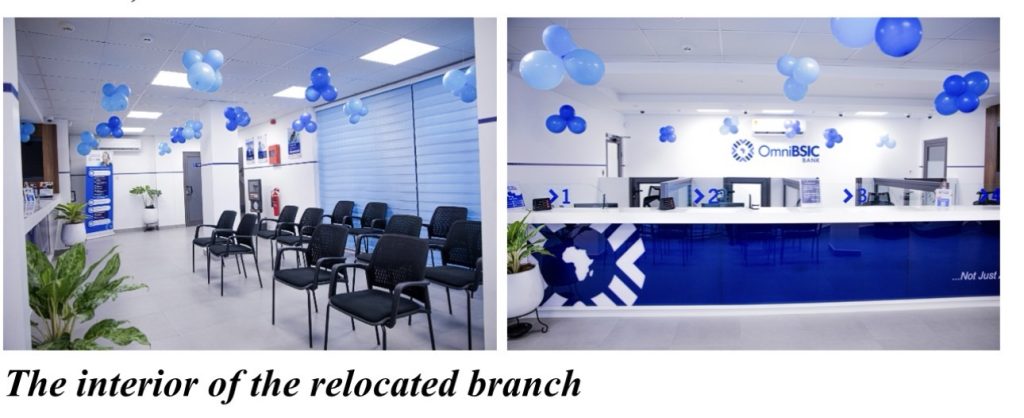
OmniBSIC Bank has relocated its Dome branch to a larger and more modern facility as part of efforts to strengthen its presence in the Dome enclave and provide customers with an improved banking experience. The new facility was officially dedicated by Theodore Takyi, Branch Manager of OmniBSIC Bank’s Airport Branch, during a ceremony attended by some bank executives, members of staff, customers and community leaders, including Evelyn Abena Sebie, Queenmother of Dome Market.
OmniBSIC Bank relocates Dome branch to enhance customer experience 6
The branch executives of the relocated Dome branch
“As we dedicate this branch to the glory of God, we also challenge the team to make it a branch that stands out within the OmniBSIC network. The relocation comes with greater responsibility to uphold our service standards, improve on them and ensure that every customer who walks through these doors experiences the quality of service we are committed to providing,” Mr Takyi said.
OmniBSIC Bank relocates Dome branch to enhance customer experience 7
He expressed the hope that the Dome branch would grow into a “star branch” within the OmniBSIC network; a branch that other branches would look up to for its service and performance.
Creating room for better service
Dome Branch Manager, Emmanuel Ashley said “Anytime a Bank puts up a new facility like this, it is to reflect our commitment to improving service delivery and enhancingcustomer experience in the community we serve.”
He added: “It is not a new branch. We are just moving to a new building, the same brand, the same commitment to putting our customers first and always making sure that we grow their business and put a smile on their faces. What we value most is turnaround time, making sure customers do not spend too much time here. We are planning to serve our customers well and make sure they are always happy”
Deepening presence in Dome and surrounding areas
Hannah Esi Dadzie, Accra North Zonal Manager of OmniBSIC Bank, said the relocation forms part of a broader strategy to grow the bank’s presence in the Dome enclave and capture opportunities across surrounding communities. “As the bank was growing, we needed a befitting edifice for the location. Beyond that, we realised that Dome had so many opportunities and we were unable to achieve that spread from our previous location,” she said.
OmniBSIC Bank relocates Dome branch to enhance customer experience 8
The interior of the relocated branch
Strong community ties
The ceremony also highlighted the branch’s longstanding relationship with the Dome community. The Queenmother of Dome Market, Evelyn Abena Sebie, said her family had maintained a relationship with OmniBSIC for nearly two decades, recalling that her late father banked with the institution for about 17 years. She also commended the bank for the support and care extended to her family after the passing of her father. “They handled me nicely and they were also kind to us,” she said, describing the bank’s service as good. Madam Sebie said the new facility would be beneficial to the wider Dome market and surrounding community.
‘Our doors are open’
Ms. Dadzie assured customers that the new facility was designed with their needs in mind and urged them to continue doing business with the bank. “Our doors are open. You are the reason why we open every day. Come in, do business with us and we are sure that the beauty of the edifice will correspond with the beauty of service we will render to our customers,” she said. The relocated Dome branch is now fully operational, providing customers with expanded space and an enhanced banking environment as OmniBSIC Bank continues to deepen its presence in communities across Ghana.
About OmniBSIC Bank
OmniBSIC Bank is a universal bank formed through the merger of the erstwhile OmniBank and Sahel Sahara Bank following the Bank of Ghana’s 2017 banking sector reforms. The successful merger strengthened the bank’s position in Ghana’s financial sector, supported by aligned business models, stakeholder commitment, strong governance, and continued investment in infrastructure. Headquartered at Airport City in Accra, OmniBSIC Bank operates 41 business locations nationwide and provides banking products, services, and digital solutions for corporates, SMEs, and individuals.
The bank also invests in technology and staff development to deliver reliable, convenient, and customer-focused banking services while supporting the communities it serves. OmniBSIC Bank has undergone a comprehensive transformation, achieving improvements across all key areas, including financial performance. It has received numerous accolades, such as:
• Best Corporate Bank Ghana, Global Banking and Finance Review, 2026
• Fastest Growing Digital Bank of the Year — Digital Innovation Award, 2025
• Most Improved Bank for Customer Service Engagement — Africa Bank 4.0 Awards, 2025
• Bank of the Year – Ghana Business Standard Awards, 2024
• Best Ghanaian-Owned Emerging Brand – Made-in-Ghana Awards, 2024
OmniBSIC Bank is currently ranked 29th on the Ghana Club 100 list by the Ghana Investment Promotion Centre (GIPC). The bank is a proud member of the Ghana Deposit Protection Scheme.
Ghana’s entertainment industry continues to produce artists who have transformed musical success into major commercial brands. In 2026, estimates of musicians’ wealth vary considerably because most artists do not publicly disclose their finances. Available industry estimates therefore provide an indication rather than audited figures.
Top 10 Richest Ghanaian Artists in Ghana 2026 — Updated 10
Based on a review of recent 2026 rankings and reported income sources, the names frequently appearing among Ghana’s wealthiest artists include 1. Sarkodie, 2. Shatta Wale, 3. Becca, 4. Stonebwoy, 5. Criss Waddle, 6. Okyeame Kwame, 7. R2Bees, 8. Reggie Rockstone, 9. Samini, and 10. Sonnie Badu.
The artists have built wealth through different combinations of music royalties, streaming, international performances, endorsements, record labels, investments, entrepreneurship and other commercial ventures.
Sarkodie and Shatta Wale consistently appear near the top of several 2026 estimates, while artists such as Stonebwoy, Becca, Okyeame Kwame and R2Bees have also built substantial commercial careers beyond recorded music.
It is important to note that these rankings are estimates and can change as artists release new music, sign endorsement agreements, tour internationally or expand their businesses.
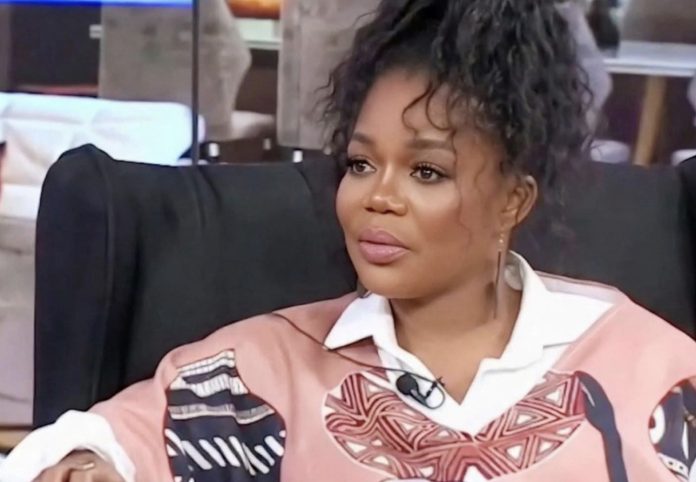
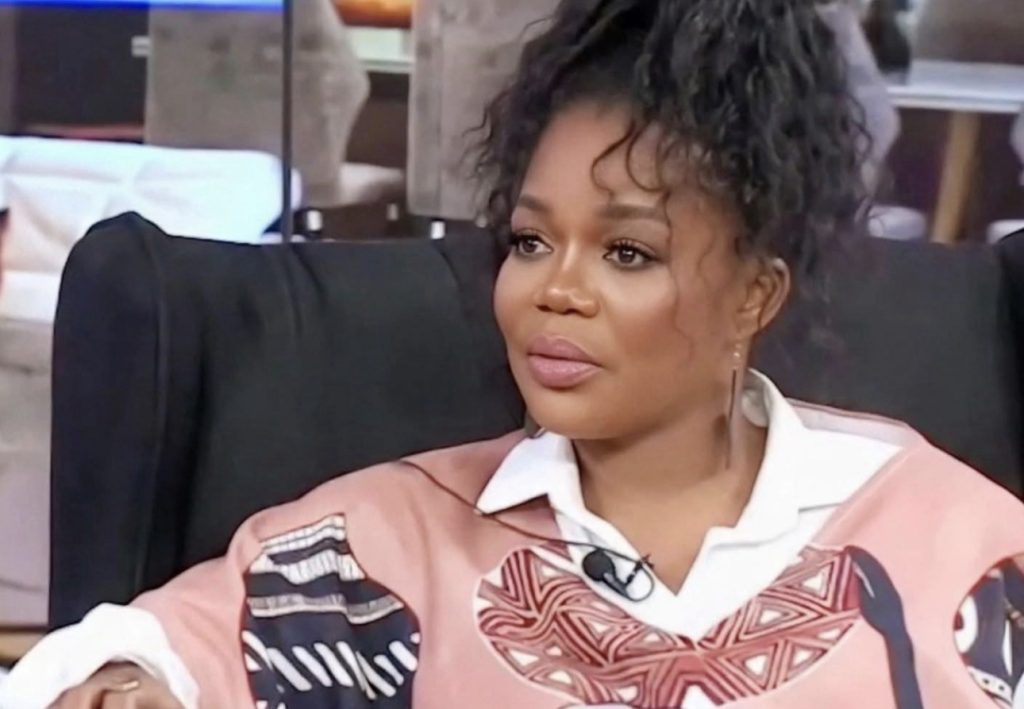
Ghanaian actress and socialite Moesha Boduong has made an emotional appeal to God for healing and restoration, expressing her deep desire to regain the life she once knew.
In footage circulating online, Moesha is heard making a heartfelt request for divine intervention, saying she wants God to heal her, restore her life and help her become the person she used to be.
MOESHA BODUONG CRIES OUT TO GOD: “I WANT MY LIFE BACK”
“It’s me again. I want You to heal me. I want my life back. I want to become the person I used to be, and I also want to travel all over the world,” she said.
Her words have drawn renewed attention to her ongoing recovery journey. Moesha has previously spoken publicly about her health challenges and her desire to regain her strength, speech and independence. In March 2025, she also appealed to fans and colleagues to pray for her complete recovery.
More recently, reports in 2026 have documented further public appearances and messages of support as she continues her recovery. In July, Nigerian media personality Dele Momodu shared photographs of Moesha after hosting her at his home in Accra and described her strength as steadily improving.
Moesha’s latest appeal has once again prompted expressions of support and prayers from members of the public, with many wishing her continued strength and restoration.
Her message remains centred on hope, faith and the desire to reclaim the life she remembers.
Select Committee Backs Sanitation Fund After Volta, Oti Success Stories
The Parliamentary Select Committee on Sanitation and Water Resources has expressed satisfaction with the use of the 10 per cent District Assemblies Common Fund (DACF) allocation for water and sanitation interventions by a majority of assemblies in the Volta and Oti Regions.
10% Sanitation Fund Under DACF Not Enough - Select Committee 14
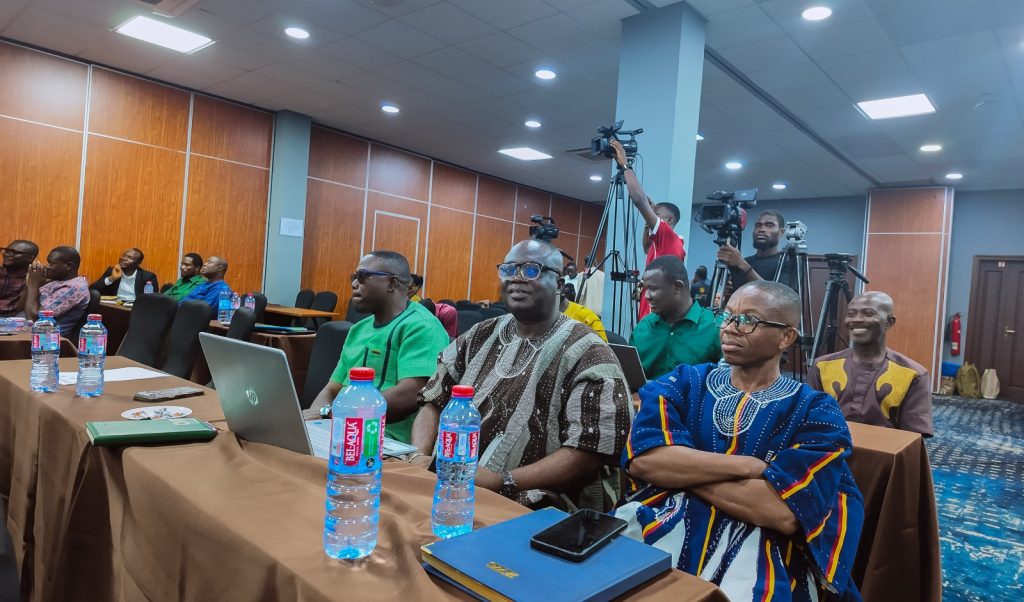
The assessment formed part of the Committee’s second-phase accountability engagement with Metropolitan, Municipal and District Assemblies (MMDAs), aimed at examining how the statutory sanitation allocation is being accessed and utilised, the projects and programmes being undertaken, and the challenges confronting the assemblies in implementing them.
The Committee engaged 18 MMDAs from the Volta Region on Friday, September 18, 2026, before continuing with presentations from the 9 districts in the Oti Region on Saturday, September 19. The assemblies presented accounts of their 2025 and 2026 DACF allocations and receipts, sanitation interventions, challenges and difficulties encountered in accessing and utilising the funds.
Speaking in an interview after the second day’s engagements, the Member of Parliament for Salaga South and member of the Committee, Ibrahimah Mohammed Zuwera, said the presentations had demonstrated that the 10 per cent allocation was supporting a range of practical interventions in local communities.
She said the Committee had seen evidence of investments in institutional toilets, mechanised and hand-pump boreholes, desilting, drainage works and other sanitation-related activities across the two regions.
According to her, the experience had strengthened the Committee’s position that sanitation required a more dedicated and sustainable financing mechanism, particularly given the results being achieved with the existing allocation.
“Today, we’ve had an opportunity to work with the nine districts in the Oti Region and I think out of the nine, eight have been stellar,” she said, commending the assemblies for what she described as their accomplishments, quality of work and commitment to addressing sanitation challenges.
10% Sanitation Fund Under DACF Not Enough - Select Committee 15
She, however, said the Committee had identified concerns with the presentation from Nkwanta North District and would require the assembly to return for further engagement in Accra to clarify issues raised during the assessment.
Ms. Zuwera stressed that the exercise was not intended merely to determine whether assemblies had spent money, but also to establish whether public funds were being used for their intended purposes and whether the interventions were producing results at the community level.
She said the Committee had also sought to establish the actual status of DACF releases, cautioning assemblies against attributing implementation challenges to non-release of funds where allocations had already been transferred.
According to her, the two quarterly allocations for 2026 had been paid, and assemblies therefore needed to provide accurate information on the status of their funds and expenditure.
“Public funds are public funds. They are not funds for personal use,” she said, adding that the Committee would continue to encourage MMDAs to ensure that public resources translated into tangible benefits for residents.
The Committee’s assessment was reflected in the experience of the Krachi East Municipal Assembly, where Municipal Chief Executive Sarfo Nketia said the assembly had used its sanitation allocation to undertake activities including desilting, construction of drains, dislodgement of sanitation facilities and clearing of sites.
Mr. Nketia said the municipality was also facing increased pressure on its sanitation and other public facilities due to an influx of people into the area, partly as a result of instability and conflicts in some surrounding communities.
He said the growing population was putting pressure on available facilities and increasing the municipality’s expenditure requirements.
According to him, access to potable water remained one of the municipality’s major challenges, despite the availability of the large lake which supports economic activity in the area.
He proposed the development of a mini water system to complement existing borehole interventions and improve access to potable water in the municipality.
Mr. Nketia also commended Zoomlion Ghana Limited for its support to the municipality, particularly in waste lifting and clean-up exercises, saying the company had provided additional assistance during national sanitation exercises.
In the Kadjebi District, District Chief Executive Dr. Sam Suraj Isaka said the assembly had adopted a collaborative approach involving market women and transport operators in maintaining sanitation at key facilities.
He said the approach had helped the assembly to improve sanitation while also encouraging stakeholders to contribute towards the payment of people engaged to clean the facilities.
Dr. Isaka said the assembly had also invested in water interventions, including eight mechanised boreholes, with another five in progress, the repair of about 23 boreholes and the provision of hand pumps in communities.
He said the district’s assessment put its water coverage at about 88 per cent, although sanitation remained challenging because of littering and difficulties in changing public behaviour.
The Kadjebi DCE said the assembly was therefore pursuing public education on waste reduction, reuse and segregation, while encouraging residents to reduce their reliance on single-use plastic materials.
He further disclosed that the district’s sanitation bylaws had been gazetted, paving the way for stronger enforcement against sanitation offenders.
Dr. Isaka said the assembly would first engage households and communities through education before fully enforcing the bylaws, with the objective of improving public health and environmental cleanliness.
The Committee’s two-day engagement also reinforced its earlier call for a dedicated national sanitation fund. Ms. Zuwera said the results from the MMDAs showed that additional resources could enable assemblies to do more, provided the funds were properly targeted and accounted for.
She said the Committee would continue its field engagements and follow up on issues requiring clarification before compiling its findings and recommendations.
The exercise is expected to provide the Committee with a clearer picture of how the 10 per cent DACF sanitation allocation is being accessed and utilised at the local level, the effectiveness of interventions funded through the allocation, and the financial and operational challenges that continue to affect sanitation delivery across the country.
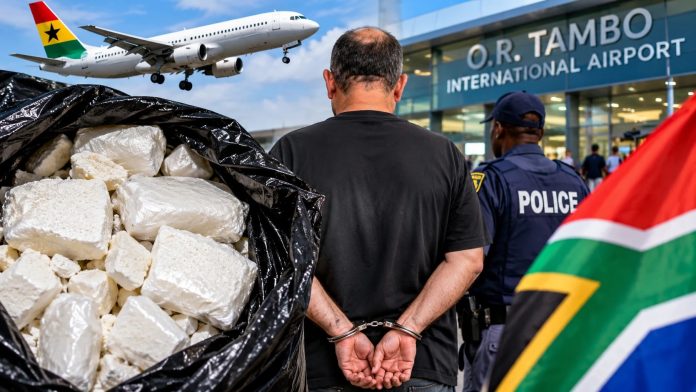
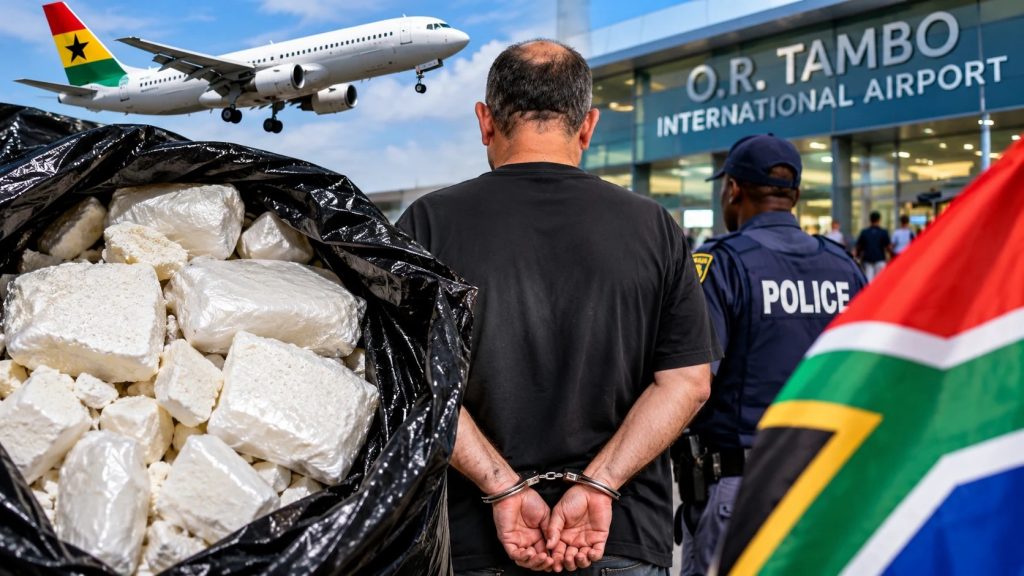
South African authorities have arrested a 52-year-old man at OR Tambo International Airport after allegedly discovering substances suspected to be heroin worth more than R2 million in his luggage.
According to South African police, the suspect had just arrived on a flight from Accra, Ghana, when he was intercepted during an intelligence-led operation involving the South African Police Service (SAPS) and the Border Management Authority.
Police Arrest Traveller From Accra With Suspected Heroin Worth R2m
Police said a search of the traveller’s luggage uncovered bullet-like objects and blocks containing substances suspected to be heroin. The suspected drugs were estimated to have a street value of more than R2 million.
The suspect is a South African national, according to police reports. Authorities have not established publicly in the initial reports whether the suspected drugs originated in Ghana or whether the traveller was acting on behalf of a wider trafficking network.
The arrest comes amid intensified efforts by South African authorities to target suspected drug trafficking through major ports of entry.
Police spokesperson Lieutenant Colonel Amanda van Wyk said the latest arrest brings the number of suspected drug mules arrested at OR Tambo International Airport to three within three weeks.
The arrested man is expected to appear before the Kempton Park Magistrates’ Court later this week, where he is expected to face drug trafficking-related charges.
Investigations are continuing as authorities seek to establish the circumstances surrounding the alleged trafficking operation and whether other individuals or networks were involved.
The allegations remain subject to the outcome of the investigation and court proceedings. The substances seized have been described by police as suspected heroin, rather than confirmed heroin pending the relevant investigative and legal processes.
GhanaMedia will continue to follow developments in the case as further information becomes available.
Ghanaian musician Mzbel has reportedly made a striking claim about a financial dispute involving an alleged debt of GH¢1.2 million.
In a statement circulating online and attributed to the musician, Mzbel said she had travelled to the northern part of Ghana and Benin in connection with efforts to address the dispute involving a woman she claims owes her the money.
Mzbel was quoted as saying that she sought spiritual intervention, including an attempt to curse the woman, but suggested that such measures were no longer effective in the current generation.
The comments have generated attention online, particularly because of the large amount of money mentioned and the unusual circumstances surrounding the alleged dispute.
However, details surrounding the alleged GH¢1.2 million debt, including the identity of the woman involved, the origin of the debt and whether any formal legal action has been initiated, remain unclear from the material circulating online.
The claims have not been independently verified by GhanaMedia, and the reported statements should therefore be treated as allegations attributed to Mzbel rather than established facts.
Financial disputes involving substantial sums can carry significant legal consequences, and parties involved may seek formal legal avenues to establish liability and recover disputed funds.
Mzbel’s reported comments have nevertheless sparked renewed discussion about debt disputes, spiritual intervention and the increasingly public nature of personal conflicts on social media.
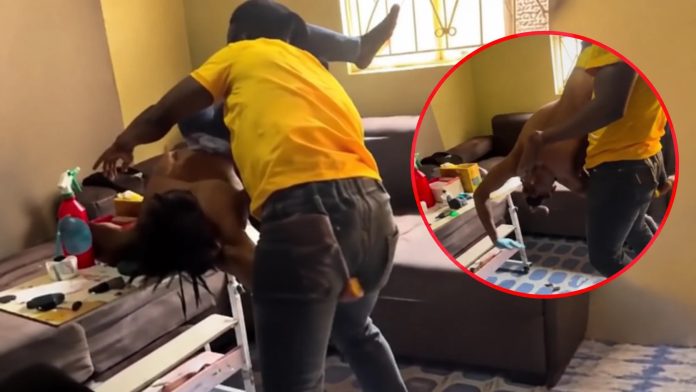
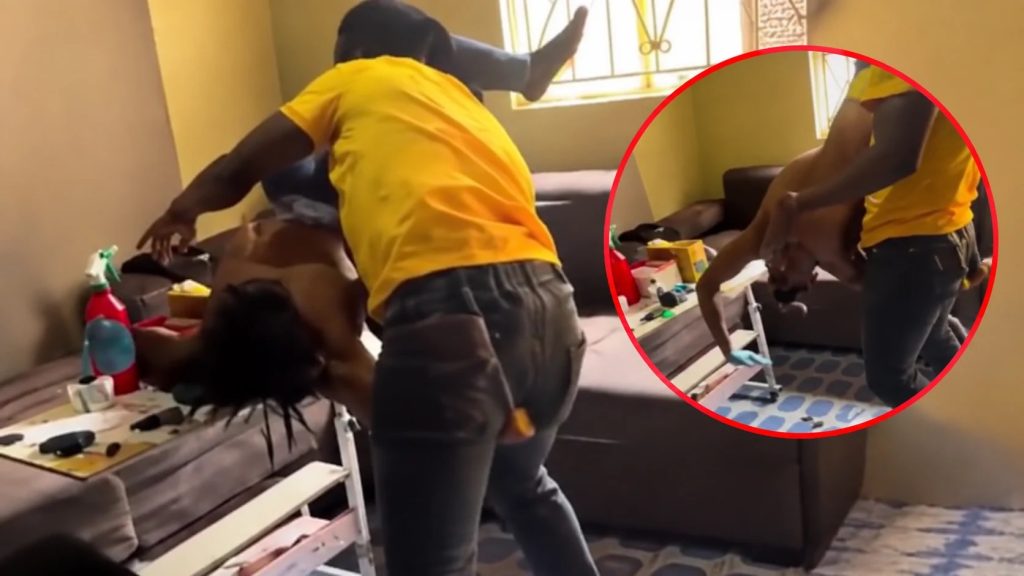
A viral video circulating online has sparked widespread reactions after a man was allegedly seen confronting his wife and a tattoo artist in what appeared to be a tense domestic situation.
According to the caption accompanying the footage, the man allegedly found his wife with the tattoo artist and reacted angrily after discovering the pair together.
Viral video sparks questions over alleged marital confrontation
The video shows a man appearing visibly upset while confronting the situation inside a room. The circumstances leading up to the confrontation, however, remain unclear, and the identities of the individuals involved have not been independently verified.
Another message appearing in the footage suggests that the man believed his belongings or personal affairs had been negatively affected by what he discovered.
The incident has generated significant discussion online, with social-media users offering different interpretations of what may have happened. However, the available footage does not independently establish the full circumstances surrounding the encounter.
Situations involving alleged relationship disputes can quickly attract public attention when videos are shared online, but short clips often provide only a limited view of events and may not capture what happened before or after the recording.
GhanaMedia urges social-media users to avoid spreading unverified allegations as established facts and to respect the privacy and dignity of the individuals involved.
The video continues to attract attention online as users debate the circumstances surrounding the alleged confrontation.
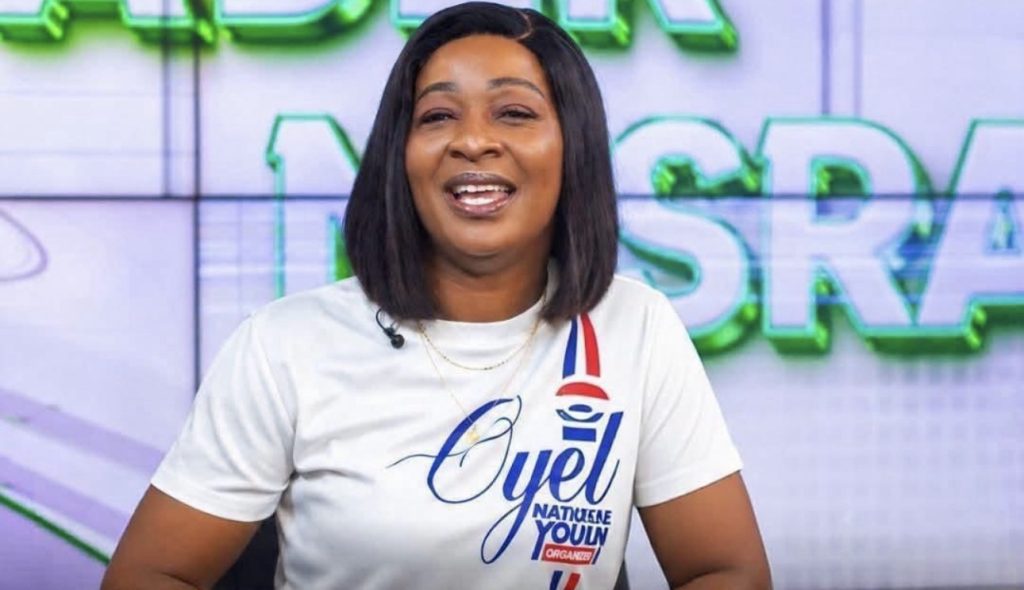
New Patriotic Party (NPP) National Youth Organiser aspirant Vera Oye Bram-Larbi has praised former President Nana Addo Dankwa Akufo-Addo’s record in office, describing him in a campaign message as a president whose level of hard work she believes stands out in Ghana’s history.
Vera Oye Bram-Larbi Praises Akufo-Addo Ahead of NPP Election 20
The statement, contained in a graphic circulating in connection with the NPP’s ongoing National Executive Elections, attributes the comment to Bram-Larbi, who is contesting the National Youth Organiser position.
Her comment comes as the NPP prepares to elect new national executives, with the National Youth Organiser position attracting six candidates in the final list: Alfred Kumi Ababio, Vera Oye Bram-Larbi, Michael Osei Boateng, Abanga Fuseini Yakubu, Clement Opoku Gyamfi and Chris Lloyd Nii Kwei Asamoah.
The NPP has scheduled its National Officers’ Elections for October 3, 2026, in Kumasi, with the exercise covering key national leadership positions. Bram-Larbi has been assigned ballot position two in the National Youth Organiser contest.
Bram-Larbi previously announced her intention to contest the position in 2025, outlining proposals focused on youth engagement, leadership development, skills training, technology and stronger participation by young party members. She has also highlighted her experience within the NPP’s youth structures as part of her campaign.
Her latest statement places the record of the Akufo-Addo administration within the wider political conversation surrounding the NPP’s internal reorganisation and the selection of its next national officers.
Akufo-Addo served as Ghana’s president from January 2017 to January 2025. His administration implemented a range of policies and programmes, while also facing criticism and public debate over economic conditions, public finances and other aspects of governance.
Bram-Larbi’s description of his work is therefore best understood as her own political assessment rather than an independently established historical fact. The statement does not provide specific measures or evidence to support the comparison with previous Ghanaian presidents.
The NPP’s internal election is expected to determine the party officials who will oversee its national organisational structures as the party prepares for the next general election cycle.
Ghana is facing an increasingly disturbing digital-safety challenge as intimate videos and images involving young people continue to circulate across social-media platforms and messaging applications.
What may begin as a private recording can quickly become a devastating public ordeal when the material is shared without the knowledge or consent of the person involved.
GHANA’S LEAKED-VIDEO CRISIS THREATENS THE NEXT GENERATION
Reports and online claims involving alleged students should, however, be treated with particular caution. The identity of any person appearing in an alleged leaked video should not be published or amplified unless independently verified and editorially justified. Where minors may be involved, the protection of their identity and dignity is especially important.
Ghana’s Cyber Security Authority has identified non-consensual intimate-image sharing, online blackmail and sextortion among cybercrime incidents being reported to authorities. The CSA has also specifically warned parents and young people about the dangers associated with sexually explicit material involving children.
Recent figures further underline the scale of Ghana’s broader cybersecurity challenge. The CSA recorded 23,363 public enquiries in 2025, including 4,604 confirmed cyber incidents, with officials noting that many cases involved children and young people whose trust had been violated.
This means the conversation cannot simply be about the latest viral video.
It must be about why young people are increasingly exposed to digital exploitation, why private material is being redistributed for entertainment, and why some users appear willing to participate in the humiliation of another person simply because content has become available online.
When private pain becomes public entertainment
A leaked intimate video is not merely another piece of viral content.
For the person involved, it can mean humiliation, emotional distress, damaged relationships, disruption to education and long-term reputational consequences. Previous reporting in Ghana has documented cases where victims experienced severe distress after intimate material was circulated without their consent.
The public therefore has a responsibility not to turn victims into spectacles.
Downloading, forwarding, reposting or encouraging others to search for alleged leaked material only expands the harm. Ghana’s Ministry of Gender, Children and Social Protection has also warned that people who share, rebroadcast, download or monetise illegally obtained intimate material can face prosecution under the Cybersecurity Act.
Schools, parents and authorities must work together
Schools cannot address this problem through punishment alone.
Students need sustained education about consent, digital footprints, online manipulation, sextortion, cyberbullying and the legal consequences of distributing intimate material.
Parents also have an important role to play. Young people who become victims should be supported rather than immediately blamed or publicly shamed. The CSA advises parents to support affected children, report the material to platforms and authorities, and avoid further circulation.
The authorities, meanwhile, must continue investigating cases where private material is deliberately recorded, distributed or used for blackmail.
The law already provides mechanisms for dealing with such conduct. Ghana’s Cybersecurity Act, 2020 contains provisions addressing sexual extortion, non-consensual sharing of intimate images and threats to distribute prohibited intimate recordings.
The conversation Ghana needs
The solution is not to publicly destroy young people whose private moments have become exposed.
The solution is to build a culture in which consent matters, privacy matters and digital responsibility matters.
Young Ghanaians have enormous potential. They are studying, creating businesses, producing music, developing technology, entering professional careers and contributing to communities across the country.
Their digital lives should not become a permanent record of one mistake, one act of betrayal or one malicious decision by another person.
The country therefore needs a stronger partnership between parents, schools, students, religious and community leaders, law-enforcement agencies, technology companies and the media.
And perhaps most importantly, the public must stop treating alleged leaked intimate material as entertainment.
If a video was shared without someone’s consent, forwarding it does not make you a spectator. It makes you another link in the chain causing the harm.
Anyone affected by online sexual exploitation or non-consensual intimate-image sharing can report incidents to Ghana’s Cyber Security Authority. The CSA lists 292 as its 24-hour reporting line.
Editorial note: GhanaMedia does not publish, link to, identify alleged victims in, or facilitate access to leaked intimate videos. Claims concerning specific individuals should be independently verified before publication.