VERIFIED — ENTERTAINMENT DEVELOPMENT; REBRANDING CORROBORATED
Gospel musician Florence Obinim is reportedly moving away from the “Obinim” identity as she prepares for a return to gospel music, amid the highly publicised marital dispute involving her and Bishop Daniel Obinim.
Florence Obinim reportedly embraces the Lioness identity as she prepares for a gospel music comeback.
Recent reports indicate that Florence’s social-media branding has changed to Lioness Ministries, with promotional appearances also using the “Lioness” identity. YEN reports that the change follows months of marital tension and comes after Florence previously said she would be willing to drop the Obinim surname from her stage identity if her husband requested it.
The circulating report identifies her new stage identity as “Akua Lioness”, while available reporting more directly confirms the broader Lioness Ministries/Lioness rebrand. GhanaMedia therefore treats “Akua Lioness” as the reported branding rather than an independently confirmed formal name change.
Florence is also expected to return to gospel music, with plans reportedly underway for new songs in the coming months.
The development comes amid the Obinim marital saga
The rebranding follows months of public discussion surrounding Florence and Bishop Daniel Obinim’s marriage. Reports in September 2026 said Florence’s family had initiated a traditional divorce process, while Obinim has publicly discussed the breakdown of the relationship.
In a recent audio reported by Pulse Ghana, Obinim claimed that he had relationships with other women during the marriage. Those claims are allegations made by Obinim himself and have not been independently verified.
Three controversies that have shaped Obinim’s public profile
1. The 2016 church flogging case
Obinim and two pastors were prosecuted after footage showed two teenagers being publicly flogged at a church service. In 2018, an Accra Circuit Court fined the three a combined GH¢12,000 over the assault.
2. The 2020 false-news and forgery case
In May 2020, Obinim was arrested and charged with publication of false news and forgery of a document. He was granted GH¢100,000 bail, with police saying investigations were ongoing at the time. The charge should not be presented as a conviction.
3. The strobe-light and siren case
In February 2022, an Akropong Magistrate Court fined Obinim and his driver GH¢1,200 after they were found guilty of illegally using strobe lights and a siren on a vehicle. The court also ordered the unauthorised equipment removed.
These episodes are part of the documented public controversies surrounding Obinim, but they are separate from Florence’s current musical rebranding and should not be used to imply anything about her own conduct.
A new chapter for Florence?
For Florence, the reported rebrand could represent a significant shift in how she presents herself publicly after years of being strongly associated with the Obinim name.
Her existing biography has long identified her as a gospel musician and preacher, while her music career predates the current marital crisis.
With the Lioness identity now appearing across her promotional presence, attention will turn toward the music itself and whether her planned comeback marks a new chapter in her career.
GhanaMedia Verdict: PARTLY VERIFIED — Lioness rebrand corroborated; “Akua Lioness” and specific comeback-release details require further confirmation.
Veteran Nigerian actor and film executive Olu Jacobs has died at the age of 84, with his family announcing his passing on Wednesday, September 16, 2026.
His son, Olusoji Jacobs, announced the death on Instagram on behalf of the family. The family identified the actor by his full name, Oludotun Baiyewu Jacobs (MFR), and gave his dates as July 11, 1942 – September 16, 2026.
Veteran Nigerian Actor Olu Jacobs Dies at 84 3
The family described him as a beloved husband, father, grandfather and uncle, referring to him as “The Lion of Lufodo.” It also appealed to bloggers and social media influencers to respect the family’s privacy during the mourning period.
A Career Spanning More Than Five Decades
Olu Jacobs was one of the most recognisable figures in Nigerian theatre, television and film.
He trained at the Royal Academy of Dramatic Art in London before building a career that included British television, international productions and Nigerian cinema. He subsequently became one of the veteran figures associated with the development of Nollywood.
His career earned him several major honours, including the Africa Movie Academy Award for Best Actor in a Leading Role in 2007 and Nigeria’s national honour of Member of the Order of the Federal Republic (MFR).
Jacobs and his wife, veteran actress Joke Silva, were also closely associated with the Lufodo Group and Lufodo Academy of Performing Arts.
Family Confirms Death After Previous False Reports
The confirmation comes after years in which false reports about Jacobs’ death circulated on social media.
In 2024, his family publicly rejected another death rumour, with his son Olusoji confirming that the actor was alive.
This time, however, the announcement has come directly from his family and has been independently reported by multiple Nigerian and international media organisations.
No cause of death was provided in the family’s announcement, and GhanaMedia will not speculate about the circumstances of his passing.
GhanaMedia Verification
VERDICT: VERIFIED — DEATH CONFIRMED BY FAMILY AND MULTIPLE CREDIBLE NEWS OUTLETS.
The supplied TRT Afrika report is consistent with the family’s announcement and multiple independent reports published on September 16, 2026. The actor died at 84, and the death was announced by his son, Olusoji Jacobs.
Olu Jacobs leaves behind a legacy spanning theatre, television and film and several generations of African audiences.
Emma Watson’s decision to step away from acting was not prompted by a failed film or a Hollywood scandal. In a 2025 interview, the former Harry Potter star explained that years of intense work, public scrutiny and the promotional demands of filmmaking had left her needing to rebuild her life away from the spotlight.
Emma Watson Explains Why She Stepped Away From Acting 5
Watson, who became internationally famous as Hermione Granger, has not appeared in a feature film since Greta Gerwig’s Little Women, released in 2019. She has repeatedly described the break as a period of personal rebuilding rather than a permanent retirement from acting.
From Hermione to Hollywood’s Highest-Profile Stars
Watson was cast as Hermione while still a child and went on to appear in all eight Harry Potter films.
Her later career included films such as The Perks of Being a Wallflower, The Bling Ring, The Circle and Beauty and the Beast.
The 2017 Disney blockbuster became one of the biggest commercial successes of her career. Contemporary reports said Watson received about $3 million upfront, with box-office incentives potentially taking her total compensation to approximately $15 million.
Beauty and the Beast ultimately surpassed $1.2 billion worldwide, making the reported $15 million potential compensation figure possible under the reported bonus arrangement.
Then She Stepped Away
Watson’s final feature-film role to date was Meg March in Little Women.
In her 2025 interview with Hollywood Authentic, she explained that the problem was not simply acting itself. She said she profoundly misses the creative side of acting but does not miss the pressure surrounding the promotion and sale of films.
Watson described that promotional side as “soul-destroying”, while saying that performing itself could feel almost meditative.
She also explained that she had worked extremely hard for a long time and eventually felt that her personal life had “bottomed out.” Her response was to step away and rebuild what she described as the foundations of her life before deciding what would come next.
“Maybe the Happiest and Healthiest I’ve Ever Been”
The break has now lasted several years, but Watson has resisted describing herself as permanently retired.
In 2025, she said she still misses acting and the creative experience of being on set. At the same time, she said she is “maybe the happiest and healthiest” she has ever been after shedding some of the pressures associated with her public persona.
She has also explored other areas of creative and academic life, including writing and directing, while continuing her studies.
What the Viral Story Gets Wrong
Some versions of the circulating story overstate or simplify Watson’s financial history.
The frequently repeated claim that the Harry Potter films alone earned her $70 million is not consistently supported by major contemporary reporting; figures around $60 million have also been reported for the eight-film franchise.
Likewise, estimates of an $85 million net worth are third-party estimates rather than an officially disclosed figure and should not be presented as an established fact.
Most importantly, Watson has not announced that she has permanently quit acting. Her own comments indicate that she misses acting and remains open to creative work, while prioritising a healthier balance in her life.
GhanaMedia Verification
VERDICT: VERIFIED — CORE STORY CONFIRMED; SOME VIRAL FINANCIAL FIGURES REQUIRE CAUTION.
The central story is supported: Watson’s last feature film was Little Women in 2019, she subsequently took an extended break from acting, and in 2025 she publicly explained that the pressures surrounding the profession contributed to her decision to step back.
The financial figures and the claim that she permanently “walked away” from acting should be treated more cautiously.
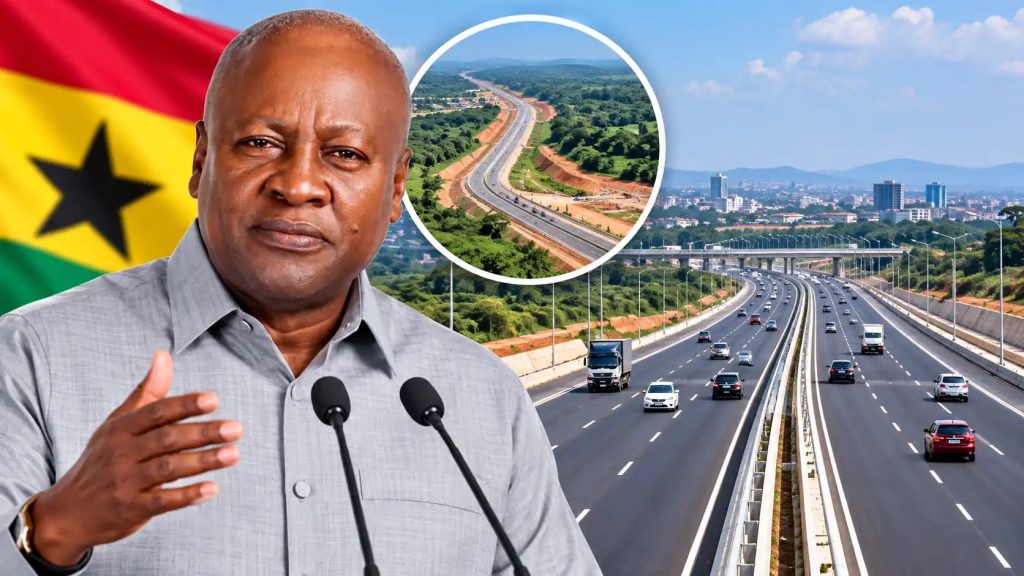
President John Dramani Mahama has said the proposed Accra–Kumasi Expressway could reduce travel time between Ghana’s two largest cities to about two hours once completed.
Speaking at Kwaso in the Ashanti Region on September 14, 2026, during the handover of 175.6 kilometres of cleared right-of-way for the project, President Mahama used a practical example to illustrate the potential impact of the planned expressway.
Mahama Says New Accra–Kumasi Expressway Could Cut Journey to Two Hours 7
“When this Expressway is finished, you can leave Kumasi at 6am and you’ll be in Accra by 8am.”
The proposed expressway is expected to cover approximately 198.7 kilometres and have six lanes, with three lanes in each direction. It is planned along a different alignment from the existing approximately 270-kilometre Accra–Kumasi Highway.
President Mahama said the recommended speed on the completed expressway would be 120 km/h and explained that travelling at around 100 km/h could allow motorists to make the journey in approximately two hours.
The project forms part of the government’s Big Push infrastructure programme. The Ghana Armed Forces completed the right-of-way clearing exercise over 19 weeks, one week ahead of the original 20-week schedule.
President Mahama said government had set aside US$2 billion to finance the project through locally generated funds, with the money reportedly held in a special account at the Bank of Ghana. He also indicated that government intends to begin the main construction phase before the end of 2026.
The Value for Money Office is expected to scrutinise the project as part of efforts to monitor the use of public funds.
GhanaMedia Verification
VERDICT: VERIFIED — THE QUOTE AND PROJECT DETAILS ARE CORROBORATED.
The viral graphic’s central quote, “Leave Kumasi at 6am, reach Accra by 8am,” accurately reflects remarks attributed to President Mahama at the September 14 ceremony.
However, the two-hour journey is a projected travel time for the completed expressway, not the current travel time between Accra and Kumasi. The expressway is not yet complete.
The graphic’s wording that Mahama “unveils” the project is also somewhat imprecise. The Accra–Kumasi Expressway had previously been announced as part of the government’s infrastructure programme, while the September 14 event marked a major preparatory milestone involving the handover of the cleared right-of-way.
German authorities have confirmed that a 14-year-old boy from Memmingen, Bavaria, was found dead in a vacant building on May 4, 2026, after being reported missing. An autopsy confirmed that the teenager died as a result of violence.
Authorities investigate the death of a 14-year-old in Memmingen after a suspect died following a police shooting.
A 37-year-old man who was treated as the main suspect was subsequently confronted by police and died in hospital after officers shot him when, according to police and prosecutors, he approached them with a knife.
What Authorities Have Confirmed
Police searching the vacant building where the teenager was found reportedly discovered a man hiding inside a cupboard. Authorities said the man acted aggressively, approached officers with a knife and then fled.
Later that evening, five plainclothes officers located the 37-year-old near a swimming pool in Memmingen. Police said he initially attempted to flee before turning toward officers while holding a knife.
According to the joint statement from police and the Memmingen Public Prosecutor’s Office, officers repeatedly ordered him to drop the weapon. When he continued approaching them, they fired, striking him several times. He was eventually disarmed with assistance from another officer carrying a shield and taken for medical treatment, but died in hospital despite resuscitation efforts.
The Bavarian State Criminal Police Office is separately investigating the use of firearms by the officers.
Rejected Asylum Application and Duldung Confirmed
The Bavarian authorities also confirmed that the 37-year-old was a rejected asylum applicant.
According to Bayerischer Rundfunk, the man had been legally required to leave Germany since September 2023, but authorities were unable to execute the removal because his identity and nationality had not been conclusively established. Attempts to obtain substitute travel documents reportedly involved contacts with the Palestinian territories and Jordan but were unsuccessful.
He therefore remained in Germany under a Duldung, a tolerated-stay status.
Authorities said his suspected place of birth was in the West Bank, while his exact nationality remained unresolved. He had also previously received financial penalties for property damage in 2021 and for unlawful residence without a passport in 2026.
Investigation Into the Teenager’s Death
Although the 37-year-old was the main suspect, the investigation into the teenager’s death was still ongoing. Prosecutors said investigators were examining forensic evidence and mobile-phone data to establish what happened and whether anyone else may have been present.
Because the suspect died before any trial, he was never convicted in court of killing the teenager. GhanaMedia therefore will not describe him as a convicted murderer.
The case has nevertheless raised questions in Germany about deportation procedures, identity documentation and the circumstances under which people subject to removal orders can remain under tolerated status.
GhanaMedia verification: The core claims in the supplied material — the death of the 14-year-old, the 37-year-old suspect’s confrontation with police, his death following police gunfire, his rejected asylum application and his Duldung because of unresolved identity and travel-document issues — are supported by German authorities and reputable German reporting.
DORiSA Consult has successfully hosted the second edition of its Business Advocacy Forum under the theme “Building Teams That Last: HR, Systems & Delegation for Sustainable Growth.”
Held online via Google Meet on Wednesday, September 9, 2026, the forum brought together business owners, managers, professionals and students to examine how SMEs can move from founder-dependent operations toward sustainable, systems-driven growth.
DORiSA Consult Holds 2nd Business Advocacy Forum on Building Teams That Last 10
Leadership Must Empower Through Delegation
Dr. Samuel Kodzo Senyoh, a Certified Leadership Coach and Management Consultant, addressed leadership and effective delegation.
He stressed that delegation should go beyond simply assigning tasks. Leaders, he explained, must understand their employees’ skills, empower them and create an environment where team members feel respected and valued.
He linked leadership to vision, strategic direction, values and culture, while describing delegation as the mechanism through which responsibility and organisational capability are distributed.
Aligning People With the Market
Dr. Nancy Erskine-Sackey, Lecturer in Marketing and Entrepreneurship at KAAF University, focused on People and Market Alignment.
She challenged business owners to consider whether their internal teams are prepared to support growth when customer demand increases.
She encouraged SMEs to recruit the right people, give them responsibility and make employees feel genuinely connected to the business and its objectives.
Sustainability Requires Strong Systems
On Institutional Leadership and Sustainability, Dr. Cynthia Sena Kpeglo-Freiku, Executive Secretary of Vice Chancellors Ghana, highlighted risk management, ethical conduct, administrative excellence, accountability and innovation.
She emphasised the importance of building HR capacity and creating systems that allow excellence to be repeated rather than depending solely on individual leaders.
Her central message was that sustainability should become a way of operating, with institutions deliberately developing people and systems capable of functioning beyond the founder or current leadership.
Governance Builds Business Confidence
The final technical presentation came from Mr. Benjamin Akyena Brantuo, Government Relations Specialist at International Justice Mission.
He discussed government relations, SME governance and stakeholder relations, explaining that businesses need more than a good idea to achieve sustainable growth.
He described governance as providing the structure through which a business is managed and argued that effective governance can help an organisation continue operating even when its founder is absent.
A Focus on Sustainable SME Growth
The forum concluded with a panel discussion and live business counselling session moderated by Dr. Doris Aryee. A vote of thanks was delivered by Ms. Elizabeth Nartey, followed by a closing prayer from Mrs. Doreen Ada Adzewoda.
DORiSA Consult said the second edition reinforced its focus on Strategy, Systems and Growth, with emphasis on People, Process and Performance.
The organisation also announced the third edition of the Business Advocacy Forum for Wednesday, October 14, 2026, at 7:00 PM, under the theme “From Visibility to Sales: Digital Positioning Strategies for SMEs in 2026.” The session is expected to focus on helping SMEs convert online visibility into measurable sales growth.
Telecel Ghana Chief Executive Officer Ing. Patricia Obo-Nai has called for a stronger culture of integrity, ethical leadership and social responsibility, saying technical competence alone is not enough to build lasting trust and value.
Telecel CEO Patricia Obo-Nai Champions Integrity in Leadership 12
Obo-Nai made the remarks while speaking at the 2026 Commencement Ceremony of Palm University College at Manya Jorpanya, Shai Hills. Palm University confirms the ceremony took place on September 12, 2026, with Obo-Nai serving as the guest speaker.
“Technical Expertise May Open the Door”
Addressing graduates under the theme “The Quest to Educate Ethical and Excellent Leaders in Ghana,” Obo-Nai emphasised the responsibility of educational institutions to develop graduates who can make ethical decisions and understand the impact of their actions.
“Technical expertise may open the door, but integrity is what sustains trust, builds brands and creates lasting value,” she said.
She argued that investors want people who can be trusted with their resources, while employers increasingly require not only technical ability but also sound judgement, discipline and character.
Obo-Nai further said ethics should be intentionally incorporated into education, reinforced through leadership examples and reflected in everyday decision-making.
Palm University Emphasises Ethical Leadership
Palm University College Founder and President Dr. Peter Carlos Okantey said the institution was established around the belief that Ghana’s development challenges extend beyond skills shortages to include ethical leadership.
He urged graduates to apply the integrity, leadership and excellence developed during their academic journey as they enter professional and public life.
Palm University College says its mission is to produce ethical and excellent leaders with integrity for corporate, national and continental creativity, innovation, service and sustainability.
The university also highlighted initiatives including its Centre for Ethical Leadership, Palm Corporate Mentoring Programme and Palm GreenLab Innovation and Incubation Lab as mechanisms for connecting classroom learning with real-world impact.
Telecel Introduces Ethical Leadership Award
During the ceremony, Obo-Nai announced the Telecel Award for Excellence and Ethical Leadership.
Sponsored by Telecel Ghana, the annual award will recognise a graduating student who combines strong academic performance with sound judgement, integrity, responsibility and service.
Telecel Ghana separately confirmed that Obo-Nai announced an annual award for the best student in ethical leadership as part of the company’s support for developing the next generation of leaders.
Valedictorian Calls for Accountability
One of the ceremony’s two valedictorians, Dr Alex Osei, who graduated with an MSc in Services Management and Leadership, also reflected on the importance of ethical decision-making.
He described ethical leadership as making the right choice even when there is no external pressure to do so, while emphasising transparency, equity and accountability.
The ceremony brought together university leadership, faculty, students, parents, traditional leaders, industry partners and other members of the Palm University community.
The event marked the graduation of Palm University College’s Class of 2026, including the institution’s first graduating cohort from its School of Graduate Studies.
Leadership Beyond the Classroom
The message from the ceremony centred on the idea that professional success should be accompanied by character and responsibility.
For Obo-Nai, the challenge is not simply to produce graduates who can perform their jobs, but leaders whose decisions can strengthen organisations and contribute positively to society.
Follow GhanaMedia on X: @GhanaMedia123 for more verified business, education and leadership stories.
Johannesburg, 07 September 2026 – Rising savings, increasing cross-border payment activity and growing participation in formal financial systems are emerging as some of the clearest indicators yet of substantial pent-up demand for economic activity across the continent.
The latest numbers from Standard Bank, the parent company of Stanbic Bank Ghana, show a buildup of deposits by 12% to R2.5 trillion, while the value of domestic electronic payments grew by 11% and cross-border payment values increased by 7%. Serving 19.5 million active clients across 21 African countries, the bank says these trends point to a continent where households are saving more, businesses are transacting more and trade corridors are becoming increasingly active.
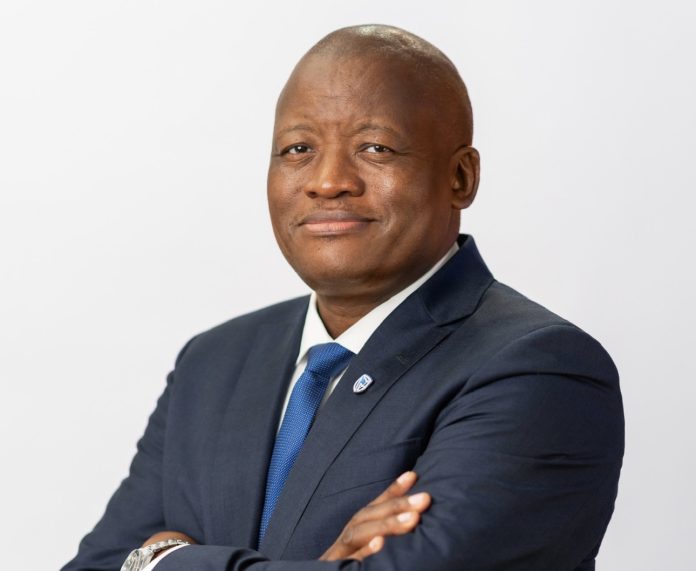
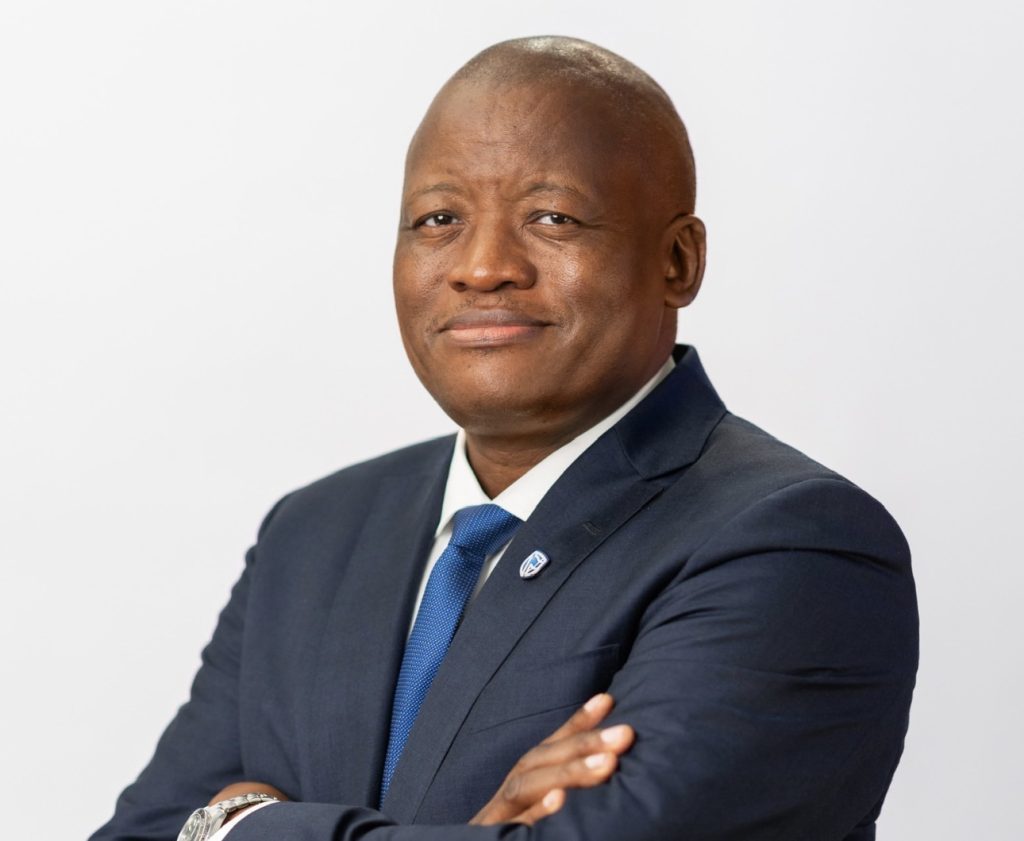
Lungisa Fuzile, Chief Executive, Standard Bank, Africa Regions
As the African Continental Free Trade Area (AfCFTA) gathers momentum and digital connectivity continues to expand, payment flows and savings behaviour are increasingly reflecting the emergence of deeper and more integrated African economies.
Lungisa Fuzile, Standard Bank Chief Executive for Africa Regions says: “What we are seeing across many markets is clear evidence of economic momentum. As more people participate in the formal financial system, as businesses trade across borders and as savings pools deepen, the foundations for sustainable growth become stronger. These are indicators of expanding economic activity and increasing confidence in Africa’s future. Our footprint spans markets that collectively account for more than 2/3 of Africa’s GDP, giving us a unique view of changing economic patterns across the continent. From growing domestic consumption and business formation to expanding trade and investment flows, the signals point to increasing economic participation and confidence.”
Rapid population growth and urbanisation, significant infrastructure investment requirements, increasing trade and capital flows, and the ongoing evolution of the continent’s financial services landscape points to a continent that is one of the fastest-growing major regions in the world.
The value of domestic electronic payments processed through Standard Bank increased by 11%, while cross-border payment values rose by 7%, reflecting growing commercial activity both within countries and across borders. The bank currently maintains a 19% market share of cross-border payments across its African markets, providing a unique window into the movement of goods, services and capital across the continent.
“The African Continental Free Trade Area is often discussed in policy terms, but its impact is increasingly visible in commercial activity. Every payment reflects a transaction. Every transaction reflects business activity. And every new trade corridor creates opportunities for growth, investment and job creation. The steady rise in payment flows suggests economic integration is gradually becoming a lived reality for African businesses,” says Fuzile.
At the same time, the growth in deposits is emerging as one of the strongest indicators of Africa’s growing economic resilience. Deposits increased to R2.5 trillion, outpacing loan growth of 7%, creating larger pools of domestic capital that can be directed towards economic development.
Fuzile says, “When households save, when entrepreneurs build businesses and when companies invest for growth, they create the foundations for stronger economies. Across many African markets we are seeing increasing evidence of exactly this kind of participation.”
The opportunity is also being supported by rising investment in the infrastructure needed to unlock long-term growth. Since 2022, Standard Bank has mobilised R328 billion in sustainable finance, including R50.6 billion during the first six months of 2026, supporting projects across renewable energy, water, agriculture, transport and broader economic inclusion initiatives.
These investments are helping address some of the structural challenges that have historically constrained growth, while creating the conditions for greater regional trade, productivity and investment.
“Africa’s next growth phase will be driven by improved infrastructure networks coupled with increasing economic participation by larger numbers of Africans, both men and women. There is considerable pent-up demand across the continent, not only for banking services but for trade, housing, energy, logistics, digital connectivity and entrepreneurship. As barriers to commerce continue to fall and economies become more connected, we expect that demand to translate into even greater levels of economic activity, investment and growth,” says Fuzile.
Ghana’s growth story remains one of undeniable resilience. With the economy expanding by 5.8% in 2025 and projected to maintain steady growth through 2027, the macroeconomic picture is brightening. Inflation is easing, the policy rate is lowering, and stability is steadily returning.
Yet, beneath these encouraging indicators lies a structural vulnerability that threatens to artificially cap the country’s long-term potential: an aging, chronically underfunded infrastructure base.
The 2026 Infrastructure Report Card, developed by the Ghana Institution of Engineering, delivered a sobering D3 grade (57%) for the nation’s infrastructure. This reflects a story of stagnation rather than outright collapse.
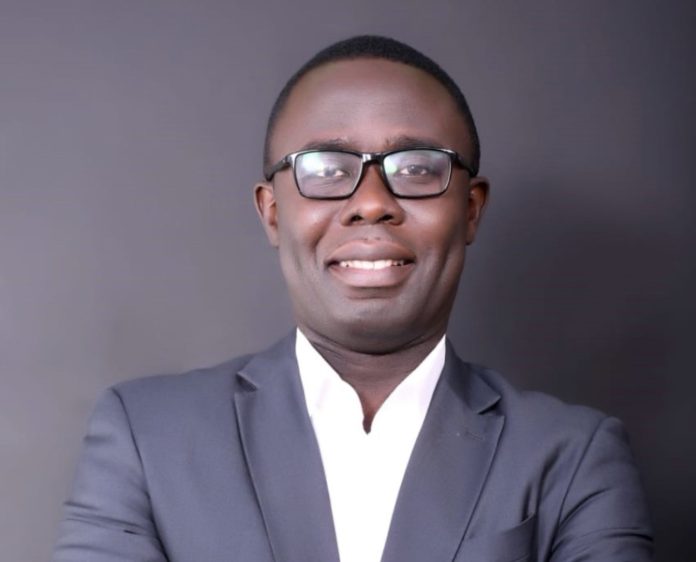
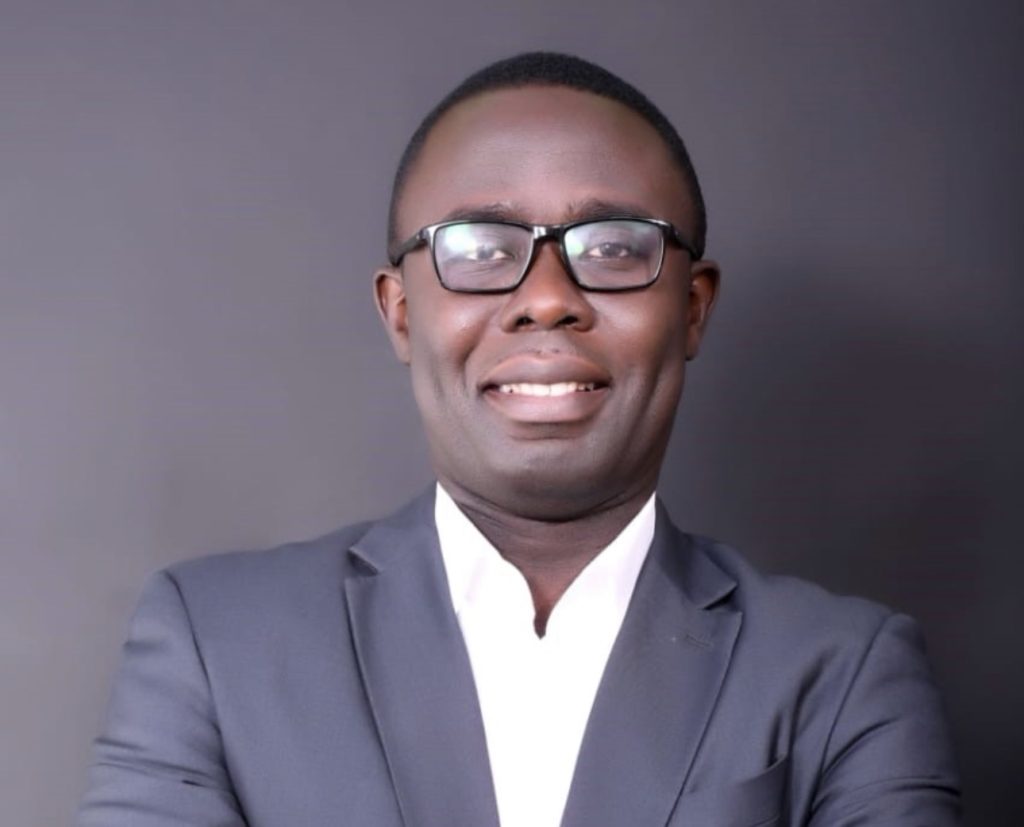
Rexford Kissiedu-Addi, Senior Vice President, Power & Infrastructure, Corporate and Investment Banking, Stanbic Bank Ghana
Despite years of public spending, inadequate maintenance, weak asset management, and chronic underfunding have taken their toll, leaving roads, health facilities, and rail networks in particularly poor condition.
The scale of the shortfall is formidable. According to the World Bank’s Ghana Sustainable Cities Strategy, Ghana requires an estimated US$37.2 billion annually in infrastructure investment to meet long-term development objectives. Historically, the nation has fallen drastically short; between 2010 and 2020, combined public and private infrastructure investment hovered around merely 5% of GDP.
Today, the African Development Bank (AfDB) places Ghana’s overall investment financing gap at roughly 9% of GDP, a deficit exacerbated by high public debt, limited domestic revenue, and tighter global financial conditions that restrict access to affordable capital.
The Ultimate Economic Multiplier
Infrastructure is not merely a budgetary line item; it is the foundational platform upon which every other sector of the economy performs. Reliable power keeps factories operational and cold chains intact.
Modern roads and railways slash the cost of moving goods, directly connecting farmers to eager markets. Efficient ports and robust telecommunications dictate whether Ghanaian businesses can successfully compete on the regional and global stage.
When these vital systems underperform, the hidden costs ripple through the economy via higher production expenses, stunted business scalability, and communities cut off from opportunity.
Studies consistently show infrastructure investment generates significant multiplier effects through higher productivity, employment, and lower transaction costs.
For Ghana, closing our infrastructure gaps, particularly in water, sanitation, power, and transport, is not just about modernization. It is a critical prerequisite for translating projected GDP growth into broad-based, inclusive prosperity, ensuring the economy’s momentum does not stall against a wall of structural bottlenecks.
Strategic Reforms and Innovative Financing
Recent fiscal consolidation measures have contributed to improving macroeconomic stability and investor sentiment. This consolidation, underpinned by successful debt restructuring and IMF program progress, is yielding renewed investor confidence, credit rating upgrades, and a stabilized cedi. Concurrently, the National Infrastructure Plan sets a bold ambition to transform the country’s landscape by 2047.
However, ambition alone cannot bridge a 9%-of-GDP financing gap, nor can any single government fund a US$37 billion annual requirement exclusively from the public purse. The path forward requires a fundamental shift in how we fund multi-decade assets, moving away from expensive, short-term external borrowing toward long-term, patient capital.
Achieving this requires mobilizing capital from multiple sources in concert. First, Ghana must broaden its domestic revenue base and deepen local currency capital markets, allowing infrastructure to be increasingly financed in cedis to mitigate foreign exchange risks.
Furthermore, structured public-private partnerships (PPPs) and blended finance instruments are critical. By combining development finance with commercial capital, we can de-risk private investment in early-stage or lower-return projects—like rural energy access and sanitation—effectively easing the burden on the public balance sheet.
Crucially, the country must leverage commercial and syndicated bank financing to empower the large indigenous and multinational contractors building our productive infrastructure. While international investment conferences regularly generate billions in pledges, the true challenge lies in execution.
Ghana must aggressively build a robust pipeline of bankable, well-structured projects to ensure that financial commitments are rapidly converted into concrete developments.
The Role of Financial Institutions in Driving Growth
Turning ambitious infrastructure blueprints into reality requires the capital mobilisation, structuring expertise and risk-management capabilities that financial institutions and development partners can provide. This is a responsibility Stanbic Bank Ghana embraces deeply, anchored by a guiding belief: “Africa is our home, we drive her growth.”
Stanbic has consistently demonstrated this commitment by financing strategic projects that catalyse Ghana’s industrialization.
A prime example is the financial backing provided to Genser Energy for the development of vital gas transportation infrastructure, which has significantly expanded reliable energy supply to the nation’s mining and industrial sectors. By empowering such critical projects, Stanbic is actively strengthening the foundations for job creation and private sector competitiveness.
These capabilities extend far beyond traditional lending. Leveraging the balance sheet strength and pan-African network of the Standard Bank Group, Stanbic is uniquely positioned to advise on project structuring, helping sponsors design bankable initiatives that attract diverse capital.
Whether it is supporting the government and private investors in developing sustainable PPP models, providing essential trade and working capital for local contractors, or spearheading local currency financing in the capital markets, Stanbic offers comprehensive solutions tailored to the complexities of large-scale infrastructure delivery.
Executing the Vision for Tomorrow
Ghana stands at a genuine inflection point. Recent macroeconomic stabilization has created the breathing room necessary for ambitious planning, while the National Infrastructure Plan offers a clear, long-term destination. The scale of the financing gap is daunting, but it is well quantified and thoroughly understood.
What remains is the rigorous work of execution: optimizing domestic revenue, structuring commercially viable PPPs, and mobilizing the blended and commercial capital needed to transform a formidable shortfall into funded, delivered assets.
Financial institutions possessing the regional expertise and local dedication to orchestrate this capital are indispensable to the journey ahead. Through collaborative effort and disciplined investment, we can build the enduring physical networks that will underpin Ghana’s sustained economic transformation for generations to come.
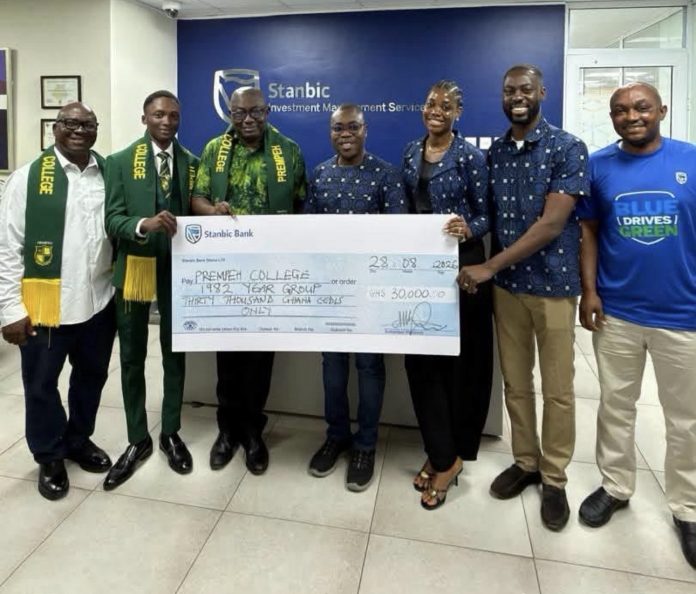
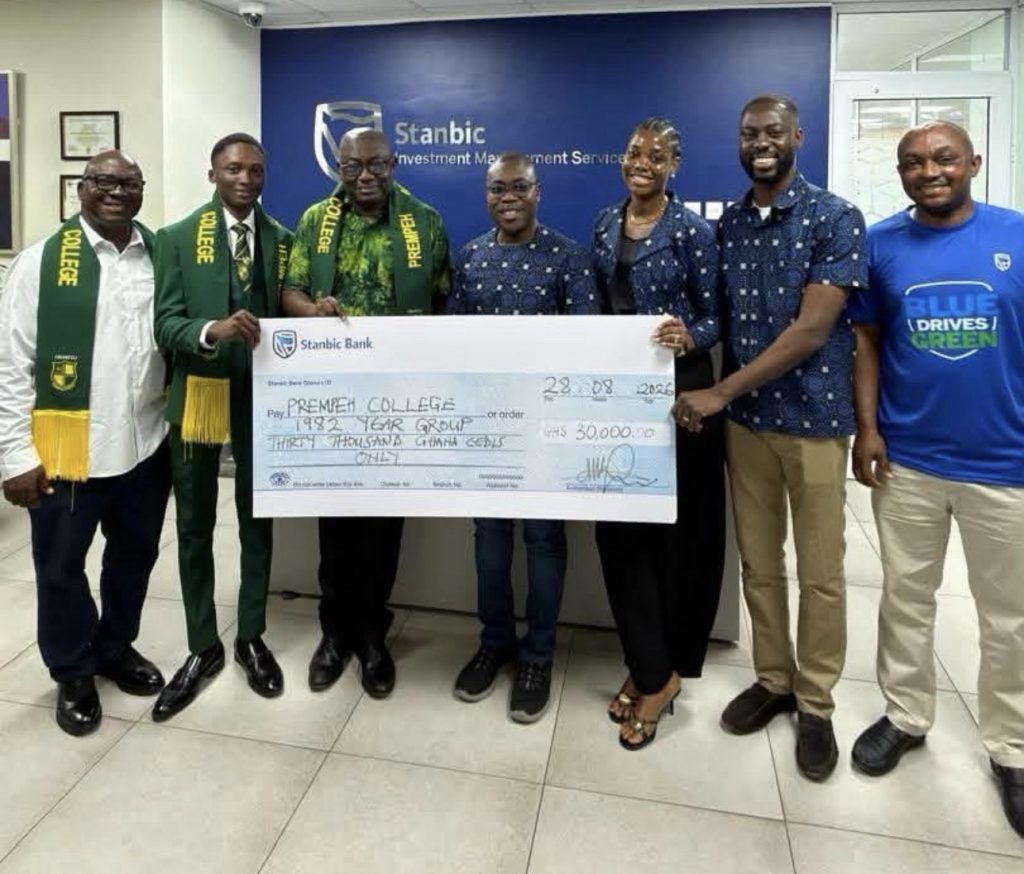
In a move to promote environmental sustainability and responsible waste management, Stanbic Investment Management Services (SIMS) has partnered with the Prempeh College 1982 Year Group to support the installation of 60 waste bins across the school’s campus. The initiative is aimed at fostering a cleaner learning environment while encouraging students to develop responsible waste disposal habits and a stronger sense of environmental stewardship.
Presenting a donation of GHS30,000 to the group, Managing Director of SIMS, Kwabena Boamah, said the support reflects the company’s commitment to creating value beyond investment management by investing in communities and initiatives that deliver lasting social impact.
Kwabena Boamah, MD, Stanbic investment Management Services with Joseph Osei, President of the 1982 Year Group(Center) with members of their teams.
He noted that SIMS believes true investment goes beyond financial returns and extends to people, communities and the environments in which they live, learn and grow. He added that the company has consistently supported social impact initiatives over the years, including healthcare interventions, neonatal equipment donations and the sponsorship of a community health post project in Horsita.
According to Mr. Boamah, the waste management initiative is intended not only to improve sanitation on campus but also to encourage students to take greater responsibility for their environment and adopt sustainable waste disposal habits. SIMS is also encouraging the adoption of simple waste segregation practices to strengthen the long-term impact of the project.
Receiving the donation on behalf of the year group, President of the Prempeh College 1982 Year Group, Francis Osei, thanked SIMS for supporting the school’s environmental agenda. He highlighted ongoing efforts by alumni and the school to strengthen Prempeh College through a five-year strategic plan aimed at enhancing academic excellence, discipline and student development.
He said the waste management project aligns with the school’s broader objective of nurturing responsible citizens, noting that environmental responsibility plays an important role in shaping discipline and leadership among students.
Also speaking at the ceremony, Immediate Past Senior Prefect of Prempeh College, Ishmael Edusei, described the donation as a meaningful contribution to the school’s development. He noted that the support demonstrates the power of collaboration between institutions and alumni and serves as an example of the impact that giving back can have on future generations.
The initiative is expected to contribute to a cleaner learning environment while reinforcing a culture of environmental stewardship across the school community, reflecting Stanbic Investment Management Services’ commitment to supporting sustainable development and creating lasting value in the communities it serves.